Thursday, November 1, 2018

3 Tips to Prepare Your Landscape for Winter

We often receive calls from clients in Spring and Summer, concerned about the health of their beloved landscape plants.  Maybe it was a planting done in honor of a departed loved one, or perhaps it’s a hedgerow planted for privacy.  Whatever the reason, many people are concerned because of dead or damaged parts of the plant.  And often, the culprit is damage done the prior Winter.  Read up on 3 tips to prepare your landscape for Winter.

Winter Protective Sprayswinter protective spray

This practice isn’t very common Central PA, but should be.  Basically, the idea is to help prevent damage to evergreen plants in your landscape by providing them with some protection from the extreme temperatures that can cause damage in the Winter.

Let’s review some basics of plant biology.  All plants go through a process where they take in water through their root systems and naturally release some through leaf or needle tissue.  This process is called “transpiration.”  If you’ve ever been on a hike on a summer day, you may have noticed it is more humid walking through a wooded area than an open field.  This is due to transpiration – the trees are allowing a small amount of water to basically evaporate through the leaf tissue.

Winter damage to landscape plants occurs when plants transpire faster than they can take in more moisture.  When the ground is frozen, plants can’t bring in moisture quickly enough to prevent damage from transpiration.

That’s where anti-desiccant sprays, also known as “Winter Protection” sprays, come into play.  These sprays basically help to seal in the moisture present in the leaf/needle tissue.  This coating slows the transpiration process with the goal of ensuring that the plant can intake and release the proper amount of water.

Plants to Treat

According to Michigan State University, there are specific plants you should target.  Short-needled conifers (Eastern hemlock, Alberta spruce, Serbian spruce, juniper, etc.) should be sprayed.  Also, broadleaf evergreens (boxwoods, rhododendrons, and hollies) are also at risk of winter damage and should be treated.

Preventing too much moisture from being released should help prevent Winter damage to the plant material.  It’s not foolproof, but done regularly and well, makes a big difference.  This is particularly important for plants susceptible to other pest or disease issues.  For example, a series of well-timed Winter Protective sprays for boxwoods may reduce the risk of contracting boxwood blight.  There’s no treatment currently available for boxwood blight, so reducing the likelihood of contraction can help prolong the life of the plant.  This is a great way to ensure a healthy landscape for Winter.
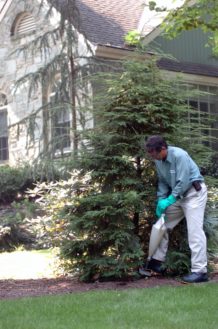
fertilizer injectionFertilization

The growing season brings a whole host of challenges to your landscape.  There are always a number of stressors on your plants throughout the season.

These include pest pressure, disease pressure, heat stress, over watering, under watering, and depleted soil nutrients to name a few.  That doesn’t even include any pressure the plant feels from pruning (proper or improper), damage from traffic compacting the soil, etc.

Again, a quick lesson in plant biology.  Many plants store up a nutrient reserve, like a “rainy day” fund.  When they’re under severe stress, they tap into that “fund” in order to help them get through a rough patch.  You’ll often see this with trees that are stressed; they will suddenly sprout new “branches” much lower on their trunks or branches.  The only place you should see leaves emerging on a tree is at the end of a branch.  When these little “water sprouts” emerge off the trunk or lower on branches, you know the tree is under stress and is utilizing this nutrient reserve to try and compensate.

Fertilization makes sure that these “rainy day funds” on your landscape plants are topped off.  It helps the plants to fight off stress from the Winter and emerge healthy and full the following Spring if you’ve fertilized late Fall.  All plants in your landscape can benefit from this service, but especially those that aren’t “looking good.”  If your plant doesn’t look “normal,” you should probably have it fertilized to help it recover from stress.  Don’t overlook this important step!

Make Sure Plants Are Sited Properly

This one is a little tricky, especially for landscapes that are already well established.  The principle is pretty simple: don’t place plants in places that are bad for them during the Winter.

It sounds easy but is harder than it looks, as there’s a lot to consider.  Even an untrained professional can look at certain things and predict where problems will arise.  For example, where do you “dump” your snow when you shovel it?  Most of us put it right along the edges of the walkway or driveway, right?improper plant siting
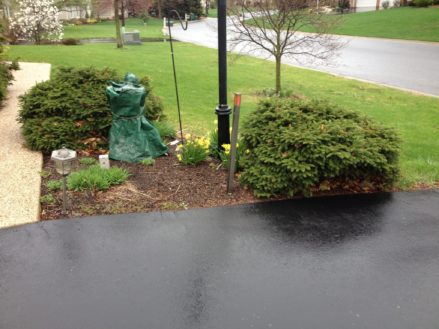
Well, is that pattern of snow piling up over and over again going to put additional stress on the plant you want to go there?  If so, you may want to consider placing that particular plant in another location.

Other considerations have to do with the plants themselves.  Does the plant you want need full sun or partial shade?  What’s the drainage of like?  Some plants require great drainage, while others prefer a moist soil.  What about soil pH?  Again, some like a balanced soil and other plants require an acidic or alkaline soil.

An important consideration for Winter is the salt tolerance of plants.  Some plants do not do well with high salt content in the soil, like white pines.  Plants sited along a walkway or roadway (where plow trucks will be close) that do not respond well to high levels of salt could be problematic.

If you’re unsure of plant selection and placement, consultation with a professional might be in your best interest to ensure the overall health of the landscape.  If you live locally and would like to speak with us about preparing your landscape for Winter, you can contact us here.

The post 3 Tips to Prepare Your Landscape for Winter appeared first on Tomlinson Bomberger.


from Tomlinson Bomberger https://ift.tt/2DiENh5

Tuesday, October 23, 2018

Tips for Using Your Garden to Help Sell Your Home

The post Tips for Using Your Garden to Help Sell Your Home appeared first on Miss Smarty Plants.

First impressions are important. Seeing as your garden is the very first thing somebody sees when looking up, visiting, or driving past your home, it is imperative that you keep it in pristine condition. Follow these tips for using your garden to help sell your home fast!

You should start preparing the outdoor aspects of your home at least a month before you plan on hosting showings. In doing so, you will be given some leeway in case anything happens to go wrong, or in case you decide to change anything.

Listed below are some things you can do to keep your garden looking sharp throughout your home selling process.

1. Seasonal Plants and Aesthetics:

One way to catch the eye of any passerby is through a little pop of color! Planning your landscape to the current or upcoming season can make people turn their heads in the direction of your home!

For instance, bright pink and yellow flowers can be planted to signify spring, which will radiate joy and happiness! If you’re selling in the fall, oranges and reds could be used to shed a little festivity on your garden.

2. Standing Out

In many neighborhoods, things can begin to look a little repetitive. A cookie cutter home with a perfectly trimmed lawn and a freshling painted fence. Bor-ing!

One way to spruce up your garden, and make your home stand out, is by adding some sort of natural characteristic that your neighbors don’t have. This could be anything from a different type of tree, to a rock bedding.

Before making any drastic changes, check into the rules of your city and neighborhood, as well as a plant’s survivability according to your area’s climate.

3. Outdoor Furniture

Another way to make a home seem more cozy and livable is by adding some outdoor furniture to your garden!

Items that would look cute include swings, water foundations, birdbaths, statues, chairs, and tables. All of these items can be found at home goods stores, such as Lowe’s or Home Depot.

4. Showing Your Pride

Having well-rounded connections can be beneficial in all aspects of life, even when it comes to real estate. One way you can create connections among the people viewing your house is by hanging a college or sports team flag within the plants of your garden.

For instance, let’s say you’re a Miami Dolphins fan, and you wish to demonstrate this by placing a flag in your yard. Every other fan is going to have a connection with you, for merely having similar taste. This could significantly increase your chances of closing a deal!

5. Festive Decorations

Having a little bit of festivity can go a long way. Not only does hanging holiday decorations within and around your yard make it more fun to look at, but it can also make your home appear more family-friendly.

If you aren’t a fan of clutter, don’t fret! Even the simple placement of a candle-lit jack-o-lantern in the fall or Christmas lights in the winter can shine a light on your garden, figuratively and literally!

If you’re selling a home in the warmer months, where there aren’t many major holidays, try adding some simple summer decorations. For instance, you could add an animal statue, such as a flamingo or dog, or even add a piece of authentic art.


This contributed post may contain affiliate links. 

The post Tips for Using Your Garden to Help Sell Your Home appeared first on Miss Smarty Plants.


from Miss Smarty Plants https://ift.tt/2yTVIlg

Friday, October 19, 2018

Late Fall Seeding Myths

We have been getting the question “When is my seeding going to be done?” a lot lately.  It’s a valid question, particularly in light of the challenging year we’ve had for lawn care in Central Pennsylvania.  Many clients have concerns that their seeding is being done too late in the season, and that the seed won’t come in or is too late in the season.  Here, we’ll dispel some late Fall seeding myths.

It’s too late in the year to do seeding

Myth: After a certain date on the calendar, you’re too late in the season to do an effective seeding job on a lawn.

Fact: Seeding results have to do with a whole host of factors.  The date on your calendar is not one of them.

Factors that DO effect seeding are things like soil temperature, moisture in the soil, nutrient availability, soil profile (how deep it is), the amount of available sunlight, and the amount of moisture given to the new seed (how you water it).

The assumption that many people make here is that because it’s “too late in the year,” that the soil temperatures will not be good for seed to come in.  In fact, over the last few years, we’ve had great soil temperatures for germination well into November.  We have no reason to suspect that this trend will not continue this year.

Slice SeedingYou can’t seed once there’s been a frost
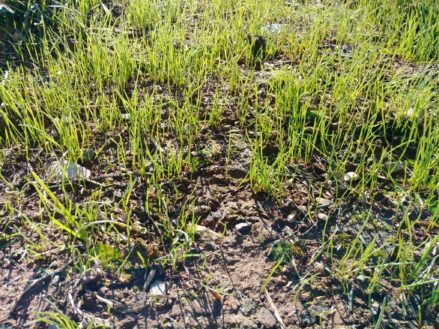
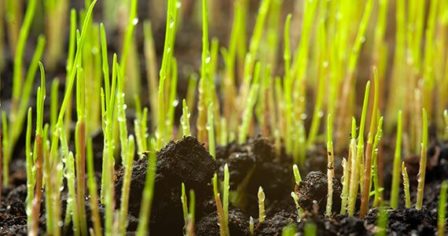
Myth: Once there’s been a frost, there is no chance that seed will germinate.

Fact: An early season frost may affect seed that has already germinated, but should not affect seed still in its casing.  Also, a single frost doesn’t mean that soil temperatures will not continue to be favorable to germination later in the Fall.

The onset of early Fall frost does not mean your seeding hopes are dashed.  This is especially true if you seeded within a couple of days of that frost, or if you haven’t seeded at all yet.

Here’s the science: seeds that are still in their casing are relatively unaffected by freezing temperatures.  They can lay dormant for a long time, and just “wait it out” until conditions are favorable for germination.  This is why you may have grass types pop up in your lawn that you don’t recognize.  We frequently get questions about this – “Where did that grass come from?” as a client points to a clump of tall fescue or a large patch of rough bluegrass.

The answer is often that the seed has been in the soil for some time, waiting for good conditions to begin its germination and maturing process.  Once conditions are right, the grass will grow.  The same holds true to for the healthy seed you’re trying to introduce late in the season!

If your lawn was recently seeded, and the seeds have germinated but are still very immature, there’s a chance those seedlings will die with an early frost.  In these cases, there’s often seed that hasn’t germinated yet laying alongside that new seed.  When Spring arrives, you’ll likely get continued growth from seed sown the prior Fall.

If you seed too late in the Fall, your lawn won’t fill innewly germinating fescue

Myth: Seeding late in Fall means your lawn will never fill in.

Fact: Dormant seeding often yields incredibly satisfactory results.

Late Fall seeding often generates an incredibly productive growing season the following year.  That seed will lay dormant until conditions are right.  Dormant seeding is a very viable option for re-establishing the desired turf density.

Some of our clients (including the owner of our company) get this done for their property.  This is also how we maintain the turf density on many of the athletic fields we’re responsible for in school districts, colleges, and universities across the Mid-State.

If late Fall seeding works to maintain turf density on a lacrosse field (perhaps the most damaging sport to turf), it will certainly help you maintain a thick, beautiful lawn.

If you do a late Fall seeding, you can’t apply crabgrass control

Phosphorus LevelsMyth: Because you seeded so late in the season, you are going to have to deal with crabgrass next Summer, or risk killing that seed.
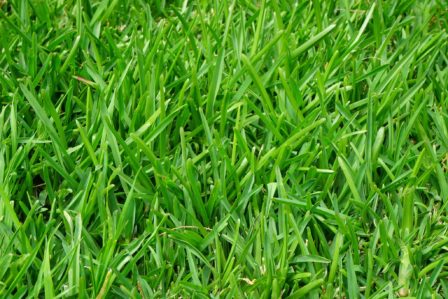
Fact: There are other options for control products that do not interfere with your seeding.

This myth was, at one time, based in fact.  For years, the only crabgrass control products (call “pre-emergent herbicides”) worked that way.  They created a barrier in the soil, and any type of grassy plant that came into contact with it was controlled.

In recent years, lawn care technology has come a long way.  Your lawn care professionals now have a few different options to selectively target grassy weeds.  This means your late Fall seeding will still have a chance to germinate in the Spring, while still controlling the crabgrass.  It’s the agronomic equivalent of “having your cake and eating it, too.”  It’s the best of both worlds.

You should communicate with your lawn care professionals if you have done a late Fall seeding yourself.  This will allow them to adjust your program to make sure you get those specialized products.  If you contracted your service provider to do the seeding, check to make sure they’ve adjusted your lawn care program for Spring to compensate.

If your lawn doesn’t look filled in by Winter, your seeding didn’t work

Myth: A re-seeded lawn should look completely “thick” by Winter.

Fact: Cool-season grasses take a long time to mature.

Cool-season grasses are what we grow best here in Central Pennsylvania.  There are four main varieties that grow well here: perennial ryegrass, Kentucky bluegrass, tall fescue and fine fescue.  Most of them germinate in a moderate amount of time (10-14 days).  Bluegrass can take up to three weeks to begin to germinate.

Once the germination process has begun, cool-season grasses have a maturation process they go through (like every other living thing).  They often look like a single “hair” growing out of the ground for a number of months.  These seedlings then go through a process called “tillering” where they “fill out” – you’ll have several blades of grass on a single plant.

Tillering often takes about six months for cool-season grasses, regardless of species.  It’s going to be mid-to-late Spring before that tillering happens.

Conclusion

For the many reasons listed above here, we recommend waiting until late April or early May in our area to evaluate whether or not a seeding has been effective.  It may take that long to determine how much tillering has happened.

If you’re an existing client of ours, please contact us with any concerns you may have about your lawn.  Also, please know that we will be making program adjustments (like using a different crabgrass control) to seeding we’re performing later in the season.


If you’d like to speak to one of our lawn care professionals about lawn care or seeding questions, please Contact Us.

The post Late Fall Seeding Myths appeared first on Tomlinson Bomberger.


from Tomlinson Bomberger https://ift.tt/2JaBo40

Wednesday, October 10, 2018

3 Ways To Keep Your Commercial Property In Tip-Top Shape Year-Round

While fall may feel like the end of the growing season, it’s actually the perfect time to plan improvements and maintenance tasks for your Atlanta commercial property. This is the season of rejuvenation to your landscape to give it an extra pop for the upcoming months. 


from HighGrove's Atlanta Commercial Landscaping Blog https://ift.tt/2ydSLMW

Friday, September 28, 2018

Spotted Lanternfly in Lancaster County

We have been seeing higher numbers of Spotted Lanternfly in Lancaster county recently.  Here are some common questions people have about Spotted Lanternfly or SLF.  We’ll also do our best to answer those questions based on available research.

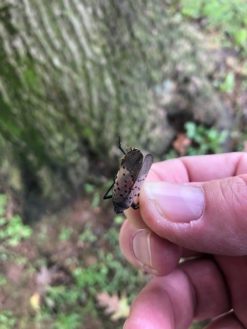
spotted lanternfly adultA couple of notes on this particular pest before we get started.  Please keep in mind:
  1. This information changes constantly as we learn more about this pest.  Please continue to refer to materials from both Penn State and the Pennsylvania Department of Agriculture for more, updated information periodically.
  2. There is no “silver bullet” or “one-size-fits-all” program for this pest.  Each situation is truly unique when it comes to management for this pest.  A variety of factors come into play with each property.  So, while a professional may be able to help you with certain parts of managing this pest, no chemical control program is “the fix” for keeping the Spotted Lanternfly population under control.

Background

Spotted Lanternfly is a type of pest called a “planthopper,” meaning it moves from plant to plant in order to feed.  It is native to China, where predators provide a measure of control.

Part of the reason for the spread of Spotted Lanternfly in Lancaster County is that there are not biological control methods.  In other words, it has no disease or predators we know of that feed on it.

Life CycleSLF life cycle

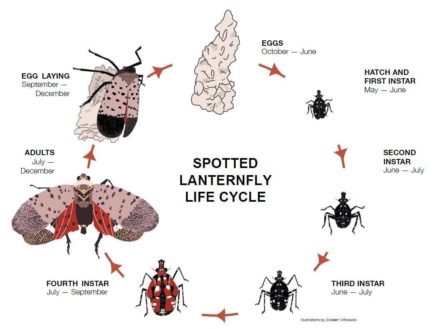
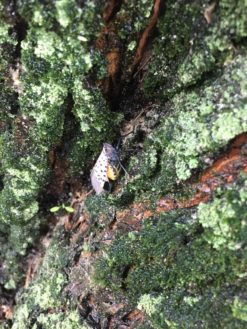
Spotted Lanternfly adults are most active laying eggs right now.  They will continue to lay eggs from now until we have a hard frost, which should kill the adult population.

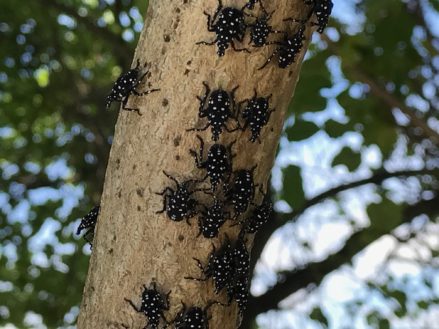
Egg masses will overwinter wherever they are laid.  Nymphs will emerge in late Spring or early Summer, and begin to feed.  These nymphs go through four instars (developmental stages) before becoming adults.  The first three instars have a black body with white spots.  The fourth instar has a black and red body, also with white spots.

Adult Spotted Lanternfly will have two sets of wings.  The outer wings gray, semi-translucent wings.  These wings will have black spots on them with gray veins.  The hidden set of wings are a bright red, giving the semi-translucent outer wings a pinkish hue underneath the gray.

The adult stage of Spotted Lanternfly is the most mobile.  Spotted Lanternfly will lay eggs on almost any surface, not just trees.  Old wood or logs laying around, cars, grills, RV’s and trailers, and mailboxes are all places SLF has been known to lay eggs.

The one thing all experts seem to agree on is that Spotted Lanternfly seems to require ailanthus altissima trees (Chinese sumac or “Tree of Heaven”) to reproduce.  Identifying the location of these trees an eliminating them is crucial.

Note: Life Cycle illustration used courtesy of Penn State University, with permission.

Damage to Property

Spotted Lanternfly can certainly damage your landscape plants.  It is safe to say that as of this posting, the chances of SLF damaging your property in 2018 are slim to none.

Spotted Lanternfly damages plants by the way it feeds on them.  It has what entomologists call “piercing/sucking mouthparts” which it inserts into the tree.  Think of a mosquito that feeds on the 3rd instar spotted lanternfly nymphsfluid inside of plants instead of blood, and you’ve got the right idea.
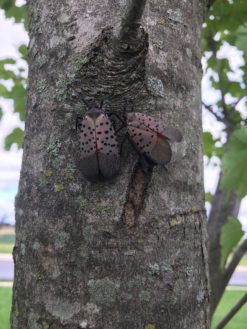
The damage occurs when SLF nymphs and adults are in high numbers – they typically feed en masse, which is where the damage occurs.  They can quite literally suck a tree dry.  Often, they secrete a sticky substance called “honeydew” when they feed.  Other insects can do this as well, like aphid and scale pests on a tree or shrub.  This honeydew encourages the growth of a black mold on bark and leaves called “black sooty mold,” which can be an indicator of Spotted Lanternfly feeding.

Spotted Lanternfly prefers to feed on plants that have a higher sugar content in their sap.  For Pennsylvania agriculture and businesses, the economic impact cannot be overstated.  According to the Pennsylvania Department of Agriculture “This pest poses a significant threat to the state’s more than $28 million grape, $87 million apple, and more than $19 million peach industries, as well as the hardwood industry in Pennsylvania which accounts for nearly $17 billion in sales.”

For your landscape, there are certain plants that you should be concerned about.  Spotted Lanternfly seems to prefer trees with a high sugar content in their sap.  Vulnerable trees include ornamental fruit trees like cherry, plum, pear, and crabapple trees, as well as maples and possibly poplar trees.

Control for Spotted Lanternfly

There are several ways you can help control the spread of this invasive pest.

Removing Ailanthus trees

It is widely recognized that Spotted Lanternfly requires the ailanthus altissima to reproduce. This tree is the spotted lanternfly’s primary target.  Because of this fact, one of the primary steps you can take to slow the spread of this pest is to remove these trees from your property.  This is a must for managing this pest!

Control for ailanthus trees is never simple – they’re very hardy plants!  What is generally recognized as the most effective control method is called “hack and squirt,” and involved cutting notches in the bark around the circumference of the tree.  Once these notches have been cut into the tree, herbicide should be applied directly into the wound.

A selective herbicide containing the chemical triclopyr may be used without damage to plants around the ailanthus tree.  However, if you are not a registered pesticide applicator in Pennsylvania and want to DIY this, a product with glyphosate (like Roundup) will work.  Use caution, however – not only are you applying an herbicide, but glyphosate is non-selective, meaning it kills any plant it touches.  If you don’t want to damage other plants around the tree, you may want to contract a professional to help.

Removing egg massesSLF egg laying

During Fall and Winter months, and after a hard freeze, it’s a great idea to inspect your property.  Look closely at the siding on your home, your cars, your grill, the trailer or RV, mailbox, trees and shrubs on the property, old piles of debris – give it a thorough inspection!

You should also inspect your cars any time you’re leaving the quarantine zone for egg masses.  If you’re going to be travelling to York, Dauphin, Cumberland, or Perry Counties, you should be inspecting your vehicle before you travel to ensure you’re not transporting SLF outside the quarantine zone.

If you see the eggs masses from Spotted Lanternfly, scrape them into a bottle or sandwich bag containing rubbing alcohol or hand sanitizer.  This will kill the eggs so they do not hatch.  If using the sandwich bag, it is recommended that you double bag, just to be safe.  Any scraped egg masses should be thrown in the garbage and disposed of immediately.

Sticky bands

When nymphs first hatch in late Spring or early Summer, they tend to migrate to the fresher, greener parts of the tree where the new growth is to begin feeding.  And this makes sense; it could their piercing/sucking mouthparts may not be as developed yet, and unable to penetrate more mature bark.  Whatever the reason, it gives people trying to control their spread another tool in the arsenal – “sticky bands.”

The basic idea is simple: wrap the trunk of the tree in a sticky material that the nymphs will get stuck on.  If they can’t get free and feed, they’ll certainly never reach adulthood!  The Spotted Lanternfly Management for Homeowners published by Penn State even recommends simply using duct tape, and wrapping in backwards, tightly around the tree as an effective method for controlling nymphs.

Homeowners who are concerned about slowing the spread of this pest should target the trees we’ve mentioned first.  Then, move on to other trees on their property with this same method.  Sticky bands should be re-applied weekly during nymph stages (late May to September) for best results.

Chemical control

This should be considered a final “backstop” to the other control methods we’ve outlined so far in this post.  There isn’t a ton of information about what’s really effective on this pest right now.  While experts agree that their nervous system is disrupted by available pesticides, none are presently labelled for use on the Spotted Lanternfly.

What seems to be working for now is a combination of two different pesticide approaches.  These are commonly referred to as systemic and contact pesticides.  Systemic pesticides are products that the plant material absorbs, and it stays inside the plant itself.  This is how products like grub control work for your lawn – the product is absorbed into the plant, and when an insect feeds, it ingests this product.

By contrast, contact pesticides are just what they sound like – they work on contact with the bug.  Examples of contact products most homeowners are familiar with are Raid and Black Flag for things like spiders and ants.  And, like those over-the-counter products, many contact pesticides also include a residual effect.  This means that they’ll continue to kill bugs for a period of time (depending on the product used, rate of application, rainfall, etc.) after the application is completed.

Systemic products seem to be having a really good results with the nymph stage of the Spotted Lanternfly right now.  The adult stage, being far more mobile, is much better controlled by contact products with regular follow up applications.

Frequently Asked Questions

two spotted lanterflies on a treeWill this kill my tree?

In short, the answer from most experts at this point is that we don’t know for certain.  Again, we do know that trees with a high sugar content in the sap are most vulnerable.  Pears, cherries, plums, apples, crabapples, maples, and possibly poplars are at risk.  You would do well to apply non-chemical control methods (scraping egg masses, sticky bands) to these trees. Also contracting a professional for the control if they feel equipped to handle the issue could help.

Can it bite me or my kids/pets?

No, we have no reason to believe that SLF is biting or causing any harm to people or pets.

My tree is dying – has the Spotted Lanternfly already killed it?

No, it is extremely unlikely that any tree in Lancaster County is suffering the effects of SLF damage right now.  We’ve had an abnormal amount of rainfall, which has caused widespread disease issues across the are with all kinds of plants.  It is more likely to be a disease, or stress from another landscape pest, than damage from Spotted Lanternfly.


If you have additional concerns about Spotted Lanternfly, we’d be happy to talk to you.  Please Contact Us for more information.

The post Spotted Lanternfly in Lancaster County appeared first on Tomlinson Bomberger.


from Tomlinson Bomberger https://ift.tt/2IqcMnk

How to Keep Your Commercial Property Trending in the Cool Seasons

Goodbye Summer, Hello Fall

As we close the curtains on summer we begin to prepare for our more cooler seasons.


from HighGrove's Atlanta Commercial Landscaping Blog https://ift.tt/2xKdjfD

Tuesday, September 4, 2018

Help Your Lawn Recover from Summer Stress

You think you have stress? What about your grass? People walk all over it. The sun beats down on it.  It’s thirsty, and weeds want to take over. Yes, it’s rough out there in the lawn. We’re here to help your lawn recover from summer stress.

But you can take some easy steps to help your lawn deal with the stresses of summer by implementing these steps! Some may feel this is extra work.  But if something is worth having, worth isn’t it worth putting in the extra work and effort?  We protect our family, money, home, and cars, but we neglect a part of our lives that we spend a lot of time on – our lawn! It is not enough just to fertilize and treat weeds, we have to cultivate a healthy lawn to better benefit our lives. We have to think of our lawn as a living thing, which is precisely what it is.

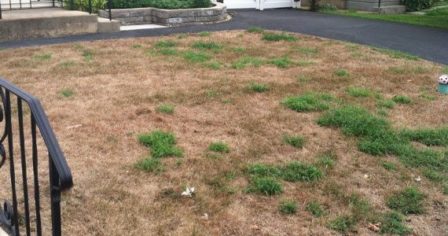
Summer Stress Factors for Your LawnChinch Bugs, Billbugs, & Sod Webworm Damage

Heat, dry weather, and foot traffic are major stresses for cool season grasses. Others include weeds and turf-damaging insects, but these issues can become worse when your lawn is already suffering. Think of your lawn as a person…. if you were dealing with all of these issues you would be stressed too!

Keep Your Mower Blade Sharp and High

Most cool-season grass types prefer to be mowed high, so set your blade at one of the highest settings on your mower. Taller, thicker grass provides shade for soil, which in turn provides relief for root system from heat. Also, grass stores most of its moisture in the leaf, so leaving the blades longer means turf is more resistant to drought stress.

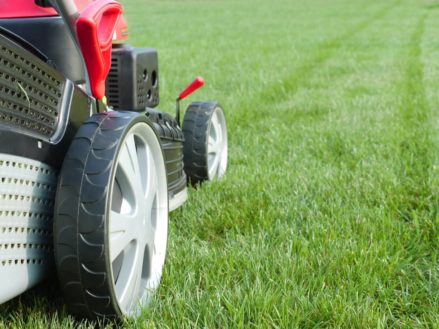
lawn mowerMowing too low has other negative effects. An increase in the sunlight reaching weed seeds, allowing them to germinate is one example. Injury to the crown, where new growth generates and nutrients are stored is another side-effect. Lastly, reduction of the surface area of the blade, making the blade surface insufficient to produce food through photosynthesis can damage the turf.
Sharp mower blades are critical, too.  Dull mower blades shred grass rather than cutting it. The result is that the turf loses more moisture than it would with a clean cut. Also, the shredded tips turn brown, making the lawn look unpleasant.

Besides that, this shredding of grass blades creates an opportunity for disease to get into the turf. When the turf is cut by a dull blade it creates an open wound which makes it easier for the disease to infect the turf.  On the other hand, a clean cut will keep turf intact and protect itself from disease.

These are not all the risks you face when mowing incorrectly, but it is important to understand the need to put in a little extra work to get great results.

If You Water, Do It in the Morning

Water is an essential part of a happy, healthy lawn, which is something we all want. It’s important, though, to make sure you water it properly.  Watering in the morning, between 6 a.m. and 10 a.m., is the most efficient time to water your lawn. Less water is lost to evaporation and your lawn has time to dry off before nightfall.

If you run a sprinkler at night, for example, it sets up the perfect conditions for disease to take hold. Why you may ask? Water can cling to the blades of grass overnight, and standing water promotes fungus. A wet lawn at night is the perfect condition for fungus to grow.
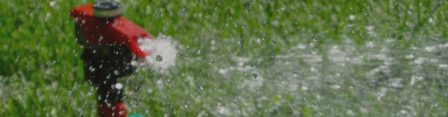
If you water too lightly, the grass roots will not grow deeply enough, setting your lawn up for trouble when hot weather hits. So, it is ideal to water your lawn about one inch of water per week. To determine how long you need to water you can use an empty tuna can. Place the can halfway between the sprinkler and the extent of the water’s reach. Once the can is full it is safe to move on to the next section of lawn and continue the process. This will make your life easier and provide the lawn with the water it needs to combat summer stress.

Try Not to Walk on Your Lawn

When you walk on a well-watered lawn, the grass blades spring back and stand upright. On a dry lawn, the grass stays beaten down, and the grass itself can be damaged.

To educate you, an early sign of drought and summer stress would be footprints remaining on grass after it’s been walked on. This is especially obvious in the summer time, when drought stress is at its peak in our area.

Also, heavy foot traffic on wet soil can lead to soil compaction, which keeps air from getting to grass roots. And being in Central Pennsylvania, we have a clay-based soil which is already very compacted.

This is another reason aeration is so important and is our next trick on recovering from summer stress.

Lawn Aeration ServiceAeration and Overseed in the Fall

Per Penn State “aeration provides an excellent, and probably the only, means of correcting or alleviating soil compaction. Compaction can greatly impede water infiltration, and nutrient penetration.”

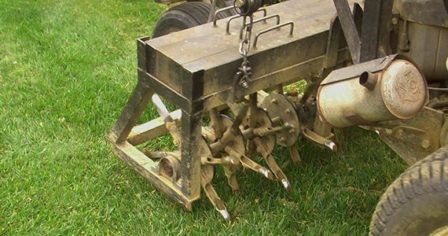
Aerators remove plugs of soil from the turf area to loosen compaction. Aeration is integral to maximizing your chances to maintain a healthy lawn throughout the season, but in particular the summer time due to our clay-based soil.

Clay soils get compacted and hard, which make it difficult for water to pass evenly and for your turf’s root system to expand properly. If your lawn is prone to heat stress, you might want to overseed it in the fall with a grass that’s been bred to handle heat and drought. Immediately after you’ve aerated is a great time to do this, to ensure seed-to-soil contact.

Our lawns deal with a lot over the seasons which effects the thickness. Seeding is going to help your investment by thickening the lawn up which will help with its ability to handle these tough conditions. It will help rejuvenate the turf and fill in thin or bare spots, this is why aeration and seeding are integral to maintaining a healthy lawn.


If you have questions about helping your lawn recover, please Contact Us, and we’ll be happy to give you a Free Consultation!

The post Help Your Lawn Recover from Summer Stress appeared first on Tomlinson Bomberger.


from Tomlinson Bomberger https://ift.tt/2Q3zy7S

First Lady Jill Biden and the White House Garden

Now that almost everyone concedes that the Bidens will be moving into the White House soon (hopefully, soon enough!), local garden writers ...