I read in The Guardian about “More than Weeds,” a French group using graffiti to highlight the “names and importance of the diverse but downtrodden flora growing in the cracks of paths and walls in towns and cities across Europe.”
Downtrodden? Why the big concern for weeds? Continuing…
“France banned pesticide use in parks, streets and other public spaces in 2017 and in gardens from 2019, leading to a surge in awareness of urban wild flowers in the country.”
Well, I say go for it but it must be challenge to turn people on to opportunistic weeds that appear, post-pesticides. Their best-known American proponent is probably Harvard’s Peter Del Tredici, whose book Wild Urban Plants got a lot of attention but didn’t inspire graffiti, that I know of.
The movement reportedly spread across Europe but ran into a curious obstacle when it reached the U.K. “In the UK it is illegal to chalk anything – hopscotch, art or botanical names – on paths or highways without permission, even if it educates, celebrates and fosters interest and knowledge in nature.”
A law like that would be a real loss to my town, where sidewalk art is keeping lots of us sane these days. I’m collecting recent works here. (Of the 42 so far, “Saint Anthony Fauci” here seem to be the favorite.)
But back to those glorious weeds, kept in check no longer. “With less spraying and weeding, we might expect to see up to 400 plant species on walls and paths…That is 10% of our wild flora richness.” And they provide eco-services:
Every flower counts and will be targeted by pollinators – a patch of nettles can be swamped with caterpillars. And bird’s-foot-trefoil, a not uncommon urban verge plant, is a food plant for more than 160 different invertebrates. If we change our perceptions and see the dandelion flower for what it is – an absolute lifeline to our bees in early spring – we might learn to love them more.”
Indeed, a “study by pollinator researchers revealed that many wild urban ‘weeds’ rank very highly for the quantity of nectar and pollen each flower provides, often much higher than a variety of garden plants.”
Like Del Tredici, these researchers take an inclusive approach to plant origin. They make no mention of nativity or not except for a study they link to, where I found this: “We found some non-native species in annual seed mix used to provide substantial resources, and there is evidence that, in an urban context, non-native species can provide useful resources to pollinators.”
More about Wild Cities!
Kudos to The Guardian for their entire “Wild Series” feature, of which the article about weeds is an example. They’re covering urban birds especially, which I happened to publish an article about yesterday. (Like gardening, birding is surging in popularity during the pandemic.) I asked a local expert to simply list the most common Birds of Greenbelt, with location and time of year, and all I had to do was add photos and links.
Common birds at Greenbelt Lake
The lake near me is full of water again after more than a year of construction, and I’m determined to at least learn the names of the waterfowl there. Binoculars at the ready!
No one wants to be dealing with a pest problem in their home, but these problems can be relatively common. It’s important that you’re looking out for the signs of them so you can nip the problem in the bud and stop them from becoming more troublesome than they need to be. Here are some examples of the pest and infestation problems you’ll need to be aware of and looking out for as a homeowner.
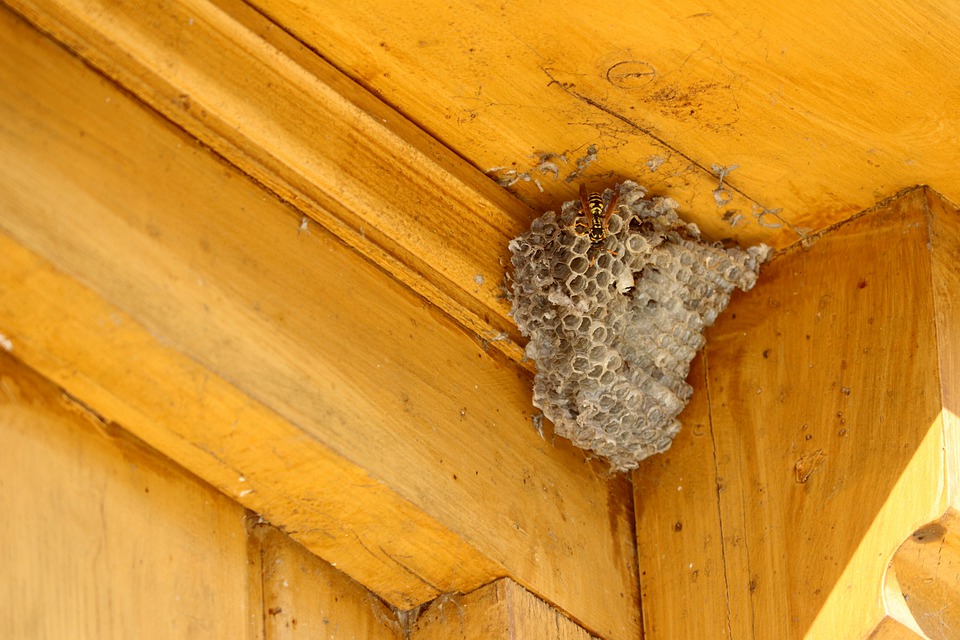
If you find a wasp nest in the garden, you should take action to have it removed at the soonest opportunity. This isn’t the kind of thing that you want to have lying around your garden because you never know how aggressive those wasps might be, and it’s best not to take any unnecessary risks. You certainly shouldn’t try to remove it yourself either; trust a professional to do the work.
Bug Infestations During Summer
Bug infestations are big problems during the summer. The last thing you want us for your home to be overrun by ants when the weather starts to improve. You should think about sealing up the entry points and using techniques to discourage bugs and insects from even getting close to your home in the first place. It’ll save you a whole heap of problems.
Rotting Animal Carcasses
Anyone who has found a dead animal on their property or in the garden knows how disgusting it can be. Once that carcas starts to rot, the stench is unbearable and you won’t want to go near it. However, that’s going to happen once animals start nesting on your property. You should take steps to have the dead animal removed safely.
Bed Bugs
Bed bugs are truly disgusting and the thought of these little critters biting away at your skin during the night is enough to make your skin crawl. That’s why you should always carefully check your bed for bed bugs and specks of blood that might indicate that they’ve been biting you while you sleep. They’re famously hard to get rid of, so call in a pro to do the work.
Termites Destroying Wooden Structures from the Inside
If you have a wood structure, whether it’s a decking area or a shed and you start to see signs of termites, it’s vital to act fast if you want to save that structure. They’ll eat away at it from the inside until there’s simply nothing left to eat away at. And that will mean the structure will eventually fail and start to collapse, which is not what you want.
Each of these pest and infestation issues are not much fun to deal with, but if you know the signs and the risks that come with them, you can spot them sooner and be sure to take action. So if you see signs of any of the problems we’ve discussed here, don’t take the risk of ignoring them.
I have spent nearly 20 years at the Big Rock corner of Louisville’s Cherokee Park. I meet here regularly with my Big Rock Tai Chi Club to practice Yang Family-Style Tai Chi. Big Rock is not our exclusive Shangri-La, as it is open to families, picnickers, plein air painters, guitar pickers, skulking teenagers, nature lovers and us.
The Big Rockers (my tai chi group) has grown smaller in the last few years, but our energy (chi) is undiminished. Nine or fewer of us meet now with Yong You, our friend and teacher.
Big Rock Tai Chi Club on the April 2010 celebration of World Tai Chi Day. Group arranged by Dan Wibbels; photo by Terry Meiners.
Here at Big Rock, I have made close friends, improved my health and found a deep sense of belonging.
Lloyd Kelly, a member of our group, demonstrates the 16-posture Tai Chi form, next to a twisting white mulberry, along the banks of Beargrass Creek.
People who truly inhabit a place are culturally adapted to that particular region or ecosystem. They know the plants, animals, weather, waters, soils—and draw their identity, lifeways and material culture—individual and collective—from that place.
–Gary Snyder
Big Rock, along the middle fork of Beargrass Creek, at the eastern fringe of the Olmsted-designed Cherokee Park, connects Louisvilleans to nature and to one another.
Our group sways in a choreography of slow, elegant moves with magical names like Brush Knee Push, Part the Wild Horse’s Mane and Repulse the Monkey. Bicyclists, joggers, parks employees, moms, dads and little kids stare at us curiously. Big Rock is full of eye-openers.
The geologic underpinnings of Big Rock began in the Silurian period. Thick slabs of Louisville limestone and Waldron shale were laid down 400 million years ago. John James Audubon admired Beargrass Creek; Shawnees depended on it.
Frederick Law Olmsted was hired to design and build a series of parks and parkways in Louisville, including Cherokee Park and Big Rock in the late 19th century. ”I never saw a park in my life which has as many natural advantages as the property just purchased,” Olmsted wrote in 1891.
Forsythia suspensa, late March
Walk the well-traveled trail, adjacent to the pavilion, and you’ll find the Big Rock that was dislodged from the steep cliff long before anyone was taking notes. It is nowhere close in size to massive boulders, two-stories high, on Yunnan’s Jinsha River near Tiger Leaping Gorge, but this is our little Beargrass Big Rock.
Beargrass, wild hyacinth (Camassia scilloides) in May
Botanist Julian Campbell unraveled the origins of the name beargrass in a fascinating story called Beargrass in the Bluegrass:Rediscovery of Ecological Meaning for Wild Hyacinth (Camassia scilloides):
“Until now, the origin of the name of Beargrass Creek in has been mysterious. The first written record was as ‘Rotten Cr. Or Bear Grass C.’ on Lewis Evans map of 1755. There is no evidence that ‘beargrass’ was a corruption of the French ‘La Barre Grosse Crique’ for ‘The Big Bar Creek,’ which has been suggested since the creek’s mouth is just above the Falls of the Ohio River. Instead, Otto Rothert theorized in1927 that the name was based on the plant Yucca filamentosa, often known as beargrass, which he stated was plentiful in the Virginia colonies. However, there is no botanical evidence that Yucca is native to Kentucky…During the 18th century, ‘beargrass’ throughout the central Ohio Valley was probably Camassia scilloides, eaten by bears and humans alike. “
Yucca filamentosa and the southern Appalachian Xerophyllum asphodeloides (beartongue) were less edible or even toxic, according to Campbell.
Water willow (Justicia americana) in June
The botanist Pat Haragan, who is a collaborator with Julian Campbell, met me near Big Rock a few weeks ago. Pat is the author of The Olmsted Parks of Louisville: A Botanical Field Guide and Weeds of Kentuckyand Adjacent States. She has a sharp eye and notices plants I easily overlook. I can spot cigar trees, elderberries, common milkweed and even an occasional devil’s-dipstick mushroom, but she sees so much more on a short walk that I have either ignored or not seen.
Elderberry (Sambucus canadensis) in JuneDevil’s dipstick, elegant stinkhorn (Mutinus elegans in September
Pat tells me about the herbaceous water willows (Justicia americana) and points to bottle brush grass (Elymus hystrix), and the diminutive and indestructible path rush (Juncus tenuis). She knows where there is a Cherokee Park hillside, nearby, carpeted with spring-flowering beargrass (Camassia scilloides).
Note to Allen: Keep your eyes peeled next spring.
There have been mornings when my conscience nags at me to tend the garden instead of practicing tai chi at Big Rock. The garden needs perpetual care, but I have habitually slowed down, in order to be with friends and enjoy the natural beauty at Big Rock for a little while. I quiet my mind, move slowly and try to avert sideways glances to see what other park visitors are doing.
The Big Rock
Tai chi works wonders. On the drive home, with my body and soul soothed, and cocktail hour in the offing, I am startled when I look into the rear-view mirror and find four cars stacked up behind me. I am going 15 mph. I hit the gas and zoom on.
I’ve recently been contributing the text for a book about high-end landscapes in the Hamptons, that playground of the wealthy at the eastern tip of New York’s Long Island. A couple of features unite almost all of these retreats. There has to be a huge “resort-style” swimming pool, of course, and beside that a large arbor for lounging made of ipé wood.
Ipé is a tropical hardwood from Amazonia. Aside from its handsome appearance – its rich, dark color has earned it the nickname “Brazilian walnut” – ipé is valued for its durability. There are claims that even when exposed to the weather ipé will last as long as 50-75 years. That sounds extravagant. I do know, though,, though, that a boardwalk made of ipé on Coney Island, NY lasted 25 years in that difficult seaside, high-traffic environment before it had to be replaced.
So when I recently confronted a need to replace the decking that flanks my own modest screened porch, I naturally thought of ipé. My deck is in a difficult spot in that it is washed by the rain from our roof whenever there’s a storm, and lies buried in snow for much of the winter. The western red cedar we’d used when we built the house 16 years ago is rotting, and I want to resurface the deck with something more durable.
Black locust, the green alternative to ipé
A little research, however, revealed that ipé comes with an unacceptable environmental cost. It’s a relatively uncommon tree, so that logging it in any quantity requires cutting meandering tracks deep into the surrounding forest. It’s also slow growing. Although some suppliers claim to stock only ipé harvested sustainably, an investigation by the environmental organization Greenpeace found that the documentation involved is routinely faked by illegal loggers.
Fortunately, there is a greener alternative available. I found online a supplier of decking made of black locust. This is a tree species native to the eastern United States, that is both abundant and fast growing. Indeed, it can spead so vigorously as to become a pest in disturbed habitats, and is regarded as invasive in parts of the Northeast where it has been distributed as a street tree. Black locust wood is extremely hard – to drive a screw through it, you have to first drill a pilot hole. It’s also extremely durable. Old time farmers favored black locust fence posts because they did not rot even after several decades in the ground. Although it lacks the rich color of ipé, black locust is reasonably attractive, a warm tan when finished.
The 5/4-inch-thick, 6-inch-wide black locust boards I ordered were expensive: the cost was $5.59 per linear foot, plus shipping from North Carolina to Massachusetts. I’ll recoup the expense, hopefully, by eliminating the need to replace the decking during my tenure of the house. Plus, of course, there will be the satisfaction of knowing my deck wasn’t hacked out of the heart of a tropical rain forest. What price do you put on that?
That was in late March, so you all know what happened to the event. At least I was able to hear our colleague Tom Christopher’s excellent interview with Jennifer about the book – the interview that convinced me I really should read the book because it features such an interesting and diverse assortment of women and career paths.
How do these women “work in the world of plants?” By owning nurseries and garden centers, collecting and selling seeds, heading up public gardens, advocating for urban gardens or farming, photographing and writing about gardens, designing gardens, and working as horticultural therapist, scientist, garden educator or historian.
Regionally, the 75 women are from across North America and the U.K., Australia, Japan and India, where Jennifer found Dr. Vandana Shiva. She’s “a celebrated international leader in environmentalism, ecofeminism, and agroecology.” Despite my lifelong feminism, I was ignorant of any “eco” version, and asked Jennifer to enlighten me by email. She wrote:
“As for ecofemisim, it is a philosophical approach to seeing the demeaning/degrading of women and the feminine principles/energies/bodies in the world as being hand in hand with the demeaning/degrading/extractive mindset humans tend to have to the earth – and that both set of problems are born of the patriarchal mindset. That if you change that mindset and its attendant power and abuse of power, both the earth/environment AND the state of/quality of life of and respect for women the world over improve dramatically. This is a mainstay of the work of Vandana Shiva.” So now we know!
The 75 women also represent a wide range of ages, though the book doesn’t reveal their actual ages. I applaud that editorial decision.
Now it’s time for some serious name-dropping! I loved discovering in the book all these women I actually know, starting with the ones in my area: Susan Pell, Beth Tuttle, Ira Wallace, Claudia West and Cindy Brown. Then there are the ones from elsewhere whom I know or have at least met: Lorene Forkner, Mia Lehrer, Marta McDowell, Debra Prinzing, Margaret Roach, Rene Shepherd, Flora Grubb, Annie Hayes and, of course, GardenRant co-founder Amy Stewart.
A writer I’ve never met but would dearly love to is Jamaica Kincaid, who to my surprise is wearing a “I can’t breathe” T-shirt in the book. I hadn’t realized that the phrase became a meme back in 2014 after the killing of Eric Garner.
About GardenRant!!
But back to Amy Stewart, one of the 75 “extraordinary women.” Amy’s profile covers her biographical journey and her many books but also quite a bit about GardenRant:
“Beyond her books, she has helped catalyze change in the horticultural world through the energetically irreverent GardenRant blog platform, which injected the field with some much needed (often female) sarcasm and deep critique of its precious and often-elitist posture.”
“In 2006 Amy cofounded GardenRant with garden writers Susan Harris and Michele Owens, and later, Elizabeth Licata. For its tenth anniversary Amy describes the new undertaking as ‘a modest little idea we had to stage as a horticultural revolt. We were tired of what the mainstream gardening media had to offer—warmed-over garden tips, repurposed press releases about the ten thousandth new coleus on the market, dull little essays about the wonders of spring—and we were convinced that bloggers could overthrow the gardening establishment. Like all good revolutionaries, we began by writing a manifesto.
“The manifesto began ‘We are convinced that gardening matters.’ To Amy,it was critical that for gardening to matter, gardeners had to “get out of the lifestyle section and as far away from home decorating as possible. We’re talking about how we interact with the plant kingdom, not how to choose a throw pillow. This shit is important! We’re flabbergasted at the idea of ‘no maintenance’ gardens. Gardening is something you do. It’s not something you buy and arrange around the exterior of your home in between fluffing the aforementioned throw pillows.’
“GardenRant was a compelling twist in gardening conversations that leveraged the new powers of the socially connected digital world to disrupt the gardening-as-consumerism model. Amy describes the beginning, recalling,’You could not say things critical of a company, or any-thing like “I f ***ing hate nandinas and they should be banned.” It was so boring.’ GardenRant opened doors in garden communication and addressed a blind spot for plantspeople that needed attention.'”
Thanks, Jennifer, for that nice reminder of our origins and for finding so many other women for us put on our radar and be inspired by.
Win the Book
Just post a comment here (or on our Facebook page) about why you want the book, and we’ll choose one at random. The deadline is a week from Monday – July 13.
Candling call duck eggs is just like candling eggs of any type, except more exciting because they are call duck eggs!
I get a few questions about how to know if eggs are still good or not, especially if a duck gets off of her nest. The best way to tell is to candle the eggs by shining a bright light through them. This can be done with a special candler or even just by using the light on your cell phone.
This photo shows me using the built in candling light on my Nature Right 360 incubator. I can tell you that I definitely look at my eggs a lot more than I ever have with this because it’s right there and so darn easy to just take a little peak!
This egg is just 5 days along. I couldn’t resist. Now if you don’t see any veins or anything at this point DO NOT THROW IT OUT. This is a very early stage and it is best to wait until 10 days to decide if any eggs haven’t been fertilized.
Have you ever seen a developing call duck egg move while candling it? It’s pretty cool. This short video shows what it looks like. Yes, it’s on TikTok
The folks at Metzer Farms have put together a great example of what you should see from day 1 through 28. You can find their excellent photos of candling call duck eggs here.
Is there anything specific you want to know on this topic? Leave me a question and I will do my best to answer.
Is there any reason to welcome chaos? It is the inevitable balance to stagnant order. In the Grand Garden, chaos is vitally necessary for life to thrive. Mary Vaananen joins us for her 4th Guest Rant.
Moody chaos in the author’s garden
THE BRITISH AUTHOR Mirabel Osler’s wonderful book was published in the 1980s, a time when British gardening was of a certain tidy proper look. Mirabel’s gentle plea was for gardeners to allow the magic back into their gardens by handing back the reins (just a little or a lot) to Mother Nature. Self-sown plants weaving a tapestry within garden beds was, to Mirabel, idyllic, unplanned and imperfectly perfect.
Since her book was published in 1989, others have come along speaking the same language. Cultivating Chaos, Sowing Beauty, and Planting in a Post Wild World all look towards making sustainable plantings that are beautiful, with natural spaces as role models. Planting the way nature plants.
Chaos in horticulture is de rigueur these days…on trend as the influencers would point out. Think Oudolf and Lurie. Catch the Dutch Wave! Or prowl the wild artfulness of the German steampunk Landschaftspark. Chaos is cool.
Ms. Osler was a fan of Christopher Lloyd (an original influencer) and perhaps her visits to Great Dixter ignited a love of, or fueled her fires for, the exuberant and (seemingly) only slightly tamed landscape.
I would love to accompany Mirabel on a stroll through the Lurie garden in downtown Chicago. Though not the swooning type, she might have to pause and take a seat to regain her composure. I know I did.
Lurie Garden downtown Chicago summer 2019
Chaos is not a warm fuzzy British grand-mum kind of word. We evolved to remove chaos in our surroundings if at all possible, increasing chances of survival. Like a black walnut tree with its juglone defenses, we tend to keep competition at bay and sight-lines open. As we have evolved, so too have plants developed clever systems of ensuring their survival. They outwit us most times.
Meet Ruellia humilis…WILD PETUNIA…a member of the Acanthaceae family. The Genus was named for Jean Ruel (1479-1537) French physician and botanist. All about Ruel, and Charles Plumier (the monk who became botanist to king Louis XIV of France), who named the plant for Ruel, at another time.
Ruellia humilis
I don’t think anyone suspects chaos in humility. Ruellia humilis…humilis meaning humble or low… has a widespread native range throughout Eastern North America from Pennsylvania to Florida and west from Minnesota to Texas. Its low-ness, about a foot high, makes it perfect as a path edger, in a rockery or front of a sunny border. Bloom times vary with the region, but here in my garden it gives forth its dusky lavender flowers beginning the end of June through September…during the hot dry months when many other plants are finished with their business. Flowers are one and done…open in the morning and are closed and hanging limp by evening. Good thing there are so many.
This humble hardy petunia depends on chaos for its perpetuation. In October, seeds “explosively dehisce” from the seed pods. That’s a new phrase for most of us. Explosive dehiscence characterizes the entire Acanthaceae family (around 4100 species) and is probably the most interesting method of seed dispersal nature has invented yet. Click for a video on seed dispersal
Seedpod of Ruellia ciliatiflora image by Erin Tripp University of Colorado
Triggering the explosions are small, hooked stalks…a modified funiculus (remember Funiculi, Funicula? Click the link for a lively listen) cradling each seed that eject them from the capsule as the seed pods dry. Think Jai alai.
Research done by a trio of undergraduate physics majors on Ruellia ciliatiflora at Pomona College in Claremont, CA worked out what happens in that moment of explosion that launches the seeds so far. The seeds launch with extreme backspin contributing to the aerodynamics. “It just looks like this gentle, beautiful motion” Dr. Dwight Whitaker Professor of Physics at Pomona, said.
Beautiful, gentle chaos?
After typing the word chaos into Dictionary.com, and yielding
Noun
a state of utter confusion or disorder; a total lack of organization or order.
I realize the precision of the Ruellia seed capsule and the synchronization of the seed launch is anything but chaotic. It is elegant indeed. A sowing all-star, this WILD PETUNIA has proven very hardy, vigorous and adaptable. Yes, it will seed around the area…figure a 10 ft radius. I have not experienced it being overzealous. If it appeals to you, site it well and enjoy it here and there.
Ruellia humilis in July
Mirabel wrote:
The very soul of a garden is shrivelled by zealous regimentation. Off with their heads go the ferns, lady’s mantles or cranesbill. A mania for neatness, a lust for conformity—and away go atmosphere and sensuality. What is left? Earth between plants: the dreaded tedium of clumps of color with earth in between. So the garden is reduced to merely a place of plants. Step – one, two. Stop – one, two. Look down (no need ever to look up, for there is no mystery ahead to draw you on), look down at each plant. Individually each is sublime, undoubtedly. For a plantsman this is heaven. But where is lure? And where, alas, is seduction and gooseflesh on the arms?
The bare earth in between plants begs for growth. No matter if you are a proud plant specimen spacer, or rely on mulch (the tinted concealer of the garden world) to fill the void, nature abhors a vacuum.
Happy re-seeding chaos in the author’s garden
You can plant re-seeders or you can let nature take its course (chaos grab bag). Either way, what appears without any creative blurp from me often looks looser and more natural—imperfectly perfect as Mirabel might say. The opportunist has grown into its place.
We know that less tidy gardens are better as habitat for insects and wildlife. When insects thrive, the whole system does. And allowing natural re-seeding keeps the dreaded tedium of bare patches of earth from exposure, drying, and weed takeover. Again, plant the re-seeders (weeds) you want to see.
A little chaos brings something intangible…call it vibe or atmosphere. Maybe don’t call it anything. The buzzing and humming of indigenous garden inhabitants stream an awesome soundtrack, don’t they?
The earth has her chaos, and the natural chaos of tornado, tsunami, earthquake…any of her big acts… inevitably brings change, sometimes big change. I can’t help feeling these current times and events are an act of nature…a seed launch into new territory. Perhaps we need to learn a gentle tolerance for the chaos within ourselves and the world.
Natural chaos.
Designed for change.
[Mirabel Osler was the author of 8 books on gardening and travel. She died in 2016.]
Mary Vaananen shelters in place in Louisville, KY. She is the North American manager for Jelitto Perennial Seeds, headquartered in Germany.


 A law like that would be a real loss to my town, where sidewalk art is keeping lots of us sane these days. I’m collecting recent works here. (Of the 42 so far, “Saint Anthony Fauci” here seem to be the favorite.)




 Now it’s time for some serious name-dropping! I loved discovering in the book all these women I actually know, starting with the ones in my area: Susan Pell, Beth Tuttle, Ira Wallace, Claudia West and Cindy Brown. Then there are the ones from elsewhere whom I know or have at least met: Lorene Forkner, Mia Lehrer, Marta McDowell, Debra Prinzing, Margaret Roach, Rene Shepherd, Flora Grubb, Annie Hayes and, of course, GardenRant co-founder Amy Stewart.
 In the meantime, check out Jennifer’s award-winning podcast


 ince her book was published in 1989, others have come along speaking the same language.


 Mary Vaananen shelters in place in Louisville, KY. She is the North American manager for Jelitto Perennial Seeds, headquartered in Germany.


