Wednesday, August 5, 2020

Looking for Something More Positive

Lovettsville, VA

Dear Scott,

Rain. Glorious rain!

The exclamation point is, I assure you, fully justified. After three and a half weeks without the stuff and without piped water to my sunniest gardens, I had reached a point of exhaustion and had begun the process of separation.

Not so positive - milk jugs on thuja
Last year and the year before were the years to plant trees – and I did. But this year, I finally had time to put in the thuja hedge. Now it’s being kept on life support by milk jugs schlepped up from the creek. How wonderful that the crab grass and creeping charlie seem undaunted.

I know you are familiar with this gardener’s trick of self-preservation. Just stop looking at the things that upset you so that they in effect, disappear. My inherited 100ft Long Bed currently requires a machete, pith helmet and vaccine certificate to enter, but by simply turning my head left instead of right when I exit the back door, the issue is solved until winter takes a crack at it.

Douglas Adams wrote of something similar in his Hitchhiker’s series – advocating the use of a towel over one’s head to successfully protect the wearer from seeing anything dangerous.  And I am successfully using something similar with my mirror these days – you do not have that many years on me you know.

I touched upon this August feeling of exhaustion/annoyance two weeks ago on my own website – pulling no punches – only to have a subscriber withdraw her reading services, citing “Looking for something more positive.”

Oh how I wanted to reply to her – breaking no doubt, sixteen Mailchimp covenants and sworn oaths of privacy – to say “My friend and fellow gardener, this IS positive. It’s the perfectly packaged pap from the everything-is-okay-I’m-doing-awesome-having-it-all-#BestLifeEver crowd that you should be avoiding.  We’re all in this together – it sure as hell helps if someone is truthful about it.”

I refrained. But I did get a giggle when Anne Wareham of The Vedww House Garden commented “Still knackered – I measure this by how many times a day I say f… off to an inanimate object.” Wonderful.

I believe you are dry in the Midwest too this year – isn’t it annoying to find ourselves more dependent on the wet stuff than we wish to be? And that’s just the vodka gin and tonics. The despair attached to a long cool spring and mostly rainless summer in a year where I am writing and photographing a book on tropical plants has necessitated a few more visits to the drinks cabinet than are advocated by those that officially advocate these things.

lilies on drinks cabinet
Fresh flowers on the drinks cabinet keeps the intoxication process civilized.

Some mornings I can feel the ghost of Beth Chatto hovering over me and my watering cans as I slop warm rainwater over sandaled, gritty toes and give Anne at The Vedww something to strive for in graduate level Creative Swearing.

Hearkening back to our discussion of gardeners you do not care to read, but don’t mind slagging off, Chatto championed the idea of planting specifically for drought tolerance.  When I last visited the Beth Chatto Garden in East Anglia two years ago, they had received all of 13 inches of rain by the end of August, and the gravel garden (built over the remains of a car park) had not had a drop of supplemental water. It was a hot summer certainly, but that area of England is particularly dry in the best of years.

Beth Chatto Gravel Garden
Beth Chatto’s Gravel Garden in August 2018

Chatto’s ghost chastises me for planting choices made in wetter years.  I’d offer her a coffee, but she has so many gardeners to chastise on her morning rounds there’s no time for a chat. Should she stay, I’m ashamed to say I would begin the discussion with an excuse — having been instructed throughout my gardening career not to.

“The difficulty with my garden,” I would say (How many sentences begin thus? I have heard hundreds myself.) “is that I live in a wooded stream valley.”

She would look at me blankly – in that way the British are so good at – in the way my militant (but beloved) godmother used to – politely waiting for the actual problem. And I would instantly feel ashamed of myself and get back to water slopping and some menial weeding.

Hypothetical one-sided discussion over.

Not that I wouldn’t continue to feel sorry for myself, chastised and muttering into the crabgrass.  For I am a gardener and that is what gardeners do. There is an enormous amount of energy spent feeling sorry for ourselves.  A dry season, a deer feast, a late spring freeze, a child on a mower. Poor Anne and Charles at The Vedww lost one massive yew in an established hedge to a dripping tap and I want to shake my fist at the Heavens for them – I can’t imagine how cosmically wronged they feel.

Ah! The glories we could achieve were it not for [X]!  The vegetables we could grow were it not for [Y]! The excuse-free year we would have were it not for [Z]!  I could go on, but I have an excuse to finish illustrating for you and demons compel me…

A wooded stream valley means free draining alluvial soils worthy of a Mediterranean garden…were it not for the 90 foot tulip poplars meting out sunlight like a miserly king. And then there’s the cold air that trips and tumbles down the hillsides to pool over my expensive zone-pushers.  Lavender without the sun. Ferns without the moisture. Water water everywhere and not a drop to drink…

A drone photo in May shows part of the lower garden, but more importantly, shows the surrounding woods lurking like Fangorn Forest. Minus the Ents.

It is a paradox that can only be solved by the time and effort needed to amend the soils and figure out what works and what won’t. Beyond the Japanese Stilt Grass, which couldn’t be happier.

During this dry year, it is tempting to allow the survivors to slip quietly into dormancy. With COVID bells sounding and everything off the calendar, including tours of my garden by highly opinionated gardeners tsking and tutting between mouthfuls of quiche and cheap plonk, I have questioned the need (for instance) to keep watering containerized color for my eyes only.  Further existential questions such as “What is it all for?” or “Is there a purpose to all this suffering?” or “Why the hell did I wait to put in that thuja hedge until THIS year?” have been springing from my lips just as often has Anne has been abusing her inanimate objects.

Now it is you who are no doubt looking for something more positive. Forgive me.  I am in an August state of mind and there is nothing like it. August will try the very soul of you. How many new, excited 20-something gardeners have met their Waterloo in August and fled back to more pleasurable ways of abusing their bodies and minds?

There I go again.  This is getting grim quickly.  You might as well be writing this letter.  Let me attempt to redeem myself with something profound: Adversity refocuses the lens of necessity.

This perhaps is the most positive lesson coming out of all this mess, by which I mean the COVID emergency, the dry summer, and the non-stop political wars:  The perspective it gives on the importance of the garden.  Not the garden in a particular moment in time mind you (glorious May, damnable August), but the garden in general. The necessity of the garden.

Space to breathe, a place to think, inanimate objects to abuse without recrimination.  I am very grateful for that.

Echinacea Granada Gold
I love the color and resilience of the Sombrero series of Echinacea too – Granada Gold is perhaps my favorite (though this is an early season photo), followed by ‘Baja Burgundy’
'Baja Burgundy' Echinacea
‘Baja Burgundy’ Echinacea

I have also been made more aware of the things I don’t need – like that containerized color in a far off part of the garden, extra pots of cuttings to water that will never find a home this season, clearance plants at deep discounts that will cost me dearly in sweat trying to revive them during a cruel summer.  It is a freeing state of mind.

I was so very thankful recently to a professional gardener on a social media page who took an honest picture of plants heading to the compost pile in the back of a truck because he hadn’t the staff to plant them, much less water them after the COVID mess.  He also had zero time to find homes for them all and arrange pick up etc… (yes, this takes time!).  He was saddened, but realistic.

I submit such honesty as “something more positive.” We all know we’re going to keep working with plants.  We all live, breathe and sleep it.  But to pretend the difficulties don’t get us down? That creates unrealistic expectations for others (particularly beginners) that may result in them chucking it all before they have had a chance to thoroughly swallow the hook.

Should we wallow? I do not believe this to be helpful either.  But a well balanced mix of good with bad is better I think than broad August smiles proclaiming truths one knows to be lies.

Now for “something more [overtly] positive”…

With August’s arrival, the tropicals are coming into their own, which is why I adore them and have spent the first half of this year slouched in front of my laptop trying to communicate why we should all have a tropical love affair or two.  They are heavy drinkers of course (you’d get on splendidly), but sometimes I am amazed by what I can get away with wielding only a watering can.

tropicals in garden
Ensete and ‘Bengal Tiger’ canna against a burgeoning ‘Baby Lace’ hydrangea.

In the early evening when I walk the garden in a better frame of mind, they magically transfer their enthusiasm for heat and humidity to the temperate shrubs and perennials who are flagging. A bit like that guest at the party who comes late, mixes up a new cocktail, commandeers the playlist and gets everybody moving again.  We’ll all have a hell of a hangover digging rhizomes in the fall, but damn, it will be worth it.

tropical pond
You simply can’t beat the instant effect of tropical foliage. This little pond area is five weeks old and looked like hell in June.

Thank you by the way for your last letter which elicited a belly laugh of the best kind. You are too rich in your praise – I can assure you it is undeserved.  I am merely an extrovert who enjoys the natural introversion of academics – and would happily sign my life away to sitting in a common room discussing Zingiberaceae over a subsidized beer if I didn’t have to literally sign my life away to another round of crippling student loans.

Been there. Done that.  If I had a rich uncle I’d be doing it again. So I read. And I study. And I tour. My garden is my lab. Minus the subsidized beer.  And the piercings.

However. Do not think for one minute I am not on to you and your cleverly-chosen avatar of Underdog. That is a strategic place to lurk, and you pull it off well.  I can only come off as harsh and unsympathetic in comparison.  I will remind you that I did once sit through one of your interminable lectures (the one where you weren’t attacking me), and you are fooling no one with the “I’m just an average, at best, student” shtick.

The Pity-The-Poor-Midwesterner routine is also particularly shrewd (esp. as anti-coastal bias is popular and I am creature of not one, but two); but I’ve seen the black, beautiful soils out there. You could throw a pack of cigarettes on the ground and sprout tobacco. Who needs mountains and oceans with fertility like that?

Yes. You are good at what you do. But do seek therapy at once.

Yours,

Marianne

P.S.  My version of too much gin at age 15 and the dirty asphalt of a drive-in right off the Mosteller Road exit in Sharonville, Ohio, is tequilla in a little town in Norway at 18. No asphalt.  Cannot touch the stuff now…double-vision fjords come flooding back. Thank God social media didn’t exist when we were young & supple, eh?

Looking for Something More Positive originally appeared on GardenRant on August 6, 2020.

The post Looking for Something More Positive appeared first on GardenRant.


from GardenRant https://ift.tt/2XzUNDH

Tuesday, August 4, 2020

Keeping Plant-Eating Wildlife at Bay in Your Yard

The post Keeping Plant-Eating Wildlife at Bay in Your Yard appeared first on Miss Smarty Plants.

When you’re putting in a lot of effort to create a garden that you love, with plants, flowers, herbs, and shrubs that you are growing yourself, you don’t want any local wildlife coming in and destroying your efforts. If you have been growing strawberries, for example, they can get eaten by birds if they’re not covered up, as well as being consumed by slugs if you don’t put any straw down (hence the name). If you live in an area with deer, then they can cause a lot of havoc in your yard too. They can destroy plants, with some of their favorites being roses, tulips, rhododendrons, and your leafy vegetable gardens. They also carry ticks too, so you don’t want to attract them to your garden. But what can you do?

There are a number of steps that you can take to stop unwanted wildlife in your yard. Some wildlife like bees are great to attract, as they are so important. But from looking into things like raccoon removal to putting preventative measures in place, you can help your yard and garden to stay looking as you want it, and keep unwanted wildlife out. Here are some things to think about.

Put in a barrier fence

One big deterrent to stopping unwanted wildlife in the garden is to get a barrier fence installed. A lot of wildlife are good jumpers, as well as good diggers, so it should be dug into the ground where possible, as well as being quite a tall fence, typically around eight feet in height. You may not be able to fence off the whole space, as it will depend on what is available to you. But even a little fencing can make a big difference.

Spray Them Away

It can be a good idea to spritz on some liquids that have a taste or smell that puts wildlife off. It can be an inexpensive way to repel them, but the success that you get will depend. Spiders, for example, are repelled by peppermint oil, so that could be spritzed around things if you find that they are being a nuisance. You can buy some ready-made solutions, but for things like deer, they will have things like eggs and garlic in the ingredients, or a loob-meal solution as a way of putting wildlife off your plants and shrubs. Some other wildlife could be attracted by those smells, so it pays to know what wildlife you are getting in your yard.

Scare them off

You can use some scare tactics to scare off wildlife from your yard, all done in a humane way too. Something like a loud noise can make a difference, but you will need to be in the house to see them, in order for that to happen. You could also invest in something like a motion-detector sprinkler that will spray something with water whenever it walks across its path. Sometimes an old-fashioned scarecrow can do the job to prevent birds too.

Have you found anything that works for you? It would be great to hear what you think.

The post Keeping Plant-Eating Wildlife at Bay in Your Yard appeared first on Miss Smarty Plants.


from Miss Smarty Plants https://ift.tt/2XtpWZl

Monday, August 3, 2020

Reflections on “Windcliff”

I don’t remember how old I was when my father helped me start a stamp collection.  Maybe six?  My father was a foreign news editor for Newsweek magazine and as such, he received lots of letters and packages from abroad.  He would save the stamps from this correspondence and bring them home to me and my sisters.  I remember a couple of sessions of gluing these brightly colored bits of paper into an album, but the hobby never really took.  I felt no drive to fill that album’s pages; I lack some fundamental collector’s instinct.

That’s why, no doubt, I am having difficulty with Daniel Hinkley’s new book, Windcliff.  I received a review copy from the publisher, Timber Press, this past week, and I’ve been delving into its 280 pages.  I’m appreciating the prose – Hinkley is a talented writer.  Likewise, the photographs by Claire Takacs are insightful and beautiful.  So far, so good.  The problem is that I don’t understand why Hinkley would want to create the kind of landscape he did, a sort of cheek by jowl menagerie of exotic plants.  The individual plant portraits in the book, both verbal and photographic, are often alluring.  But the broader shots, when Takacs or Hinkley pulls back for a panorama, more typically strike me as cluttered.  Skillfully arranged, certainly, but cluttered.

Scenic or cluttered? It depends on the viewer…

Hinkley, who has made many plant-collecting expeditions himself, gardens within a vigorous and well respected tradition.  Think of the great plant collectors of 19th century and early 20th century England such as Frank Kingdon-Ward and Ernest “Chinese” Wilson, and the many famous gardens that their clients and their successors have created.  My reaction to all of these is respect for the expertise but bafflement about the motivation.

The gardens that speak to me, that I find most powerful, rely on simpler materials disposed to interact with and complement the landscape and setting.  The classical gardens of Italy and Japan come immediately to mind.  On a more contemporary note, I find much to admire in the current school of “ecological gardeners” who strive to work within a local flora and ecosystem while also making the landscape comfortable and beautiful for its human inhabitants.  Such duets with nature offer a sense of being rooted in place that I find viscerally appealing and exciting.

Many people I know and respect disagree with me in this matter.  For them, I suspect, reading Windcliff is going to be a great pleasure.  I will persist in my own effort, and perhaps I will better understand the collector’s impulse by the time I turn the last page.


Reflections on “Windcliff” originally appeared on GardenRant on August 3, 2020.

The post Reflections on “Windcliff” appeared first on GardenRant.


from GardenRant https://ift.tt/39Pyn6i

Friday, July 31, 2020

Even Garden Writers who Hate Trump are Defending the Rose Garden Upgrade

The announcement from the office of Melania Trump that the Rose Garden is getting an upgrade next month came at the worst possible time. It also came from one of the worst possible sources – a First Lady whose design tastes, whether it’s gilded apartments or Handmaid’s Tale-style Christmas trees – have come in for widespread abuse. (And then there’s who she’s married to, but no need to cover that topic here.)

So what does she have in store for the hallowed ground that is the White House Rose Garden?

Relax. It’s not HER design! It’s a much-needed upgrade planned by two very prominent landscape architects and their firms, along with the Committee for the Preservation of the White House and the keepers of the 18-acre property – the National Park Service.

The local landscape architecture firm hired for the job is none other than Oehme van Sweden, arguably the best known firm in this area, if not the whole country. I’ve fan-blogged them several times myself – here, here, here, here and here. Nuf said.

The other designer I’d never heard of but want to know more about. According to Washingtonian Magazine, “Trump tapped a New Yorker, a landscape architect from the Hamptons named Perry Guillot. Guillot is ‘a favorite of Hamptonites like Aerin Lauder, Tina Brown, and Tory Burch,’ according to Vanity Fair, is ‘somewhat of an authority on privacy-affording shrubbery,’ according to The Architect’s Newspaper, and even penned a coffee-table book about the privet, that ‘privacy-affording’ shrub ubiquitous around Southhampton.”

(Living among historic privet hedges myself, I’m curious to read his take on them.)

But if you just skim the 241-page Rose Garden Landscape Report that was attached to the announcement, as I did, you’ll see that it’s been in the works for quite a while. You might even notice that the groups consulted for the project include some of the most respected people in the DC area. (For example.)

What Other Garden Writers are Saying

While the Twittersphere was going nuts over the announcement, and by nuts I mean full of references to Marie Antoinette, I was happy to see that Adrian Higgins’s take in the Washington Post was quite sensible. (In order words, we agree.)

 …the lavish redo of the Rose Garden has generated Marie Antoinette comparisons. In reality, the renovation is long overdue.

Among the problems to be addressed: a poorly drained lawn that had to be replaced annually, constant disturbance of roots of trees and shrubs by the seasonal planting of annuals, the die-off of rose bushes to the point where only a dozen or so remained, and the susceptibility of the defining boxwood parterres to a new, devastating disease named boxwood blight.A

One valid criticism that gardeners are raising is the timing of the work, including the planting of lots of new plants – in August. Higgins writes:

The rapid installation of the design is in contrast to the time spent developing it; we are told that construction projects at the White House are typically done in high summer when the first family is vacationing. But as any gardener in Washington knows, this is one of the most challenging periods of the year to plant living things, including turf grass.

Still seems crazy but if that’s what the gardening team there has to contend with, more power to them! I imagine landscapers everywhere can identify with clients making their job much harder than necessary.

Moving on, Kathy Jentz, editor of Washington Gardener Magazine, wrote in an email to me:

I actually don’t have an issue with it – looking at the plans it is really a tweak and partial restoration plus installing new underground irrigation and drainage pipes that are failing on the site.

Of course, certain media outlets are hyping it to make it political and about her, but I think this is actually staff-driven (national park service) and long overdue.

Gotta agree with Kathy. Though surely the announcement could have been handled differently – maybe had it come from a National Park Service bureaucrat instead of Melania herself? Yeah, that wasn’t going to happen.

Or maybe the announcement could have been worded differently. Saying that the renovation should be viewed as an “act of expressing hope and optimism for the future”? Don’t know that that resonates with anyone. Or this: “Our country has seen difficult times before, but the White House and the Rose Garden have always stood as a symbol of our strength, resilience and continuity.” Which brings us back to timing. Really unfortunate timing.

By the way, there were similar reactions to Melania Trump’s announcement in March (yes, of this year!) that a Classically styled tennis pavilion was being installed on the White House grounds. As one does to cope with life-threatening national crises.

For nonpolitical reactions I turned to a prominent architecture blog and found a few mentions of the architecture itself – that it’s just fine – but lots more mentions of Marie Antoinette. It’s just that kind of year.

Photo credit:  Trump apartment.

Even Garden Writers who Hate Trump are Defending the Rose Garden Upgrade originally appeared on GardenRant on July 31, 2020.

The post Even Garden Writers who Hate Trump are Defending the Rose Garden Upgrade appeared first on GardenRant.


from GardenRant https://ift.tt/39JNf63

Thursday, July 30, 2020

Why You Shouldn’t Let Garden Pests Bug You

The post Why You Shouldn’t Let Garden Pests Bug You appeared first on Miss Smarty Plants.

Cultivating a garden means putting up with garden pests. One moment your vegetable patch is coming along nicely, and the next it’s been torn apart by slugs and snails. It’s as if they wait for you to finish before they start eating just to get on your nerves.

The problem is two-fold. Aside from wanting a perfect garden, there are millions of bugs in a small surface area. Therefore, pests frustrate you day and night. For many people, it’s a burden they’re happy to bear. However, it might be worth letting go.

These are the reasons why.

Borders Keep Big Pests Out

Unusually, worrying about garden pests is a rare occasion where you’re more bothered about the little things than the big ones. Of course, a thousand paper cuts will hurt. Still, if big animals get into your garden, they’ll cause irreversible destruction, forcing you to start over. At least by hiring a fence company to erect a border, you can have peace of mind that the damage will be minimal as you’ll only have to put up with insects. Compared to a racoon or skunk, they’re heaven!

Some Bugs Are Carnivores

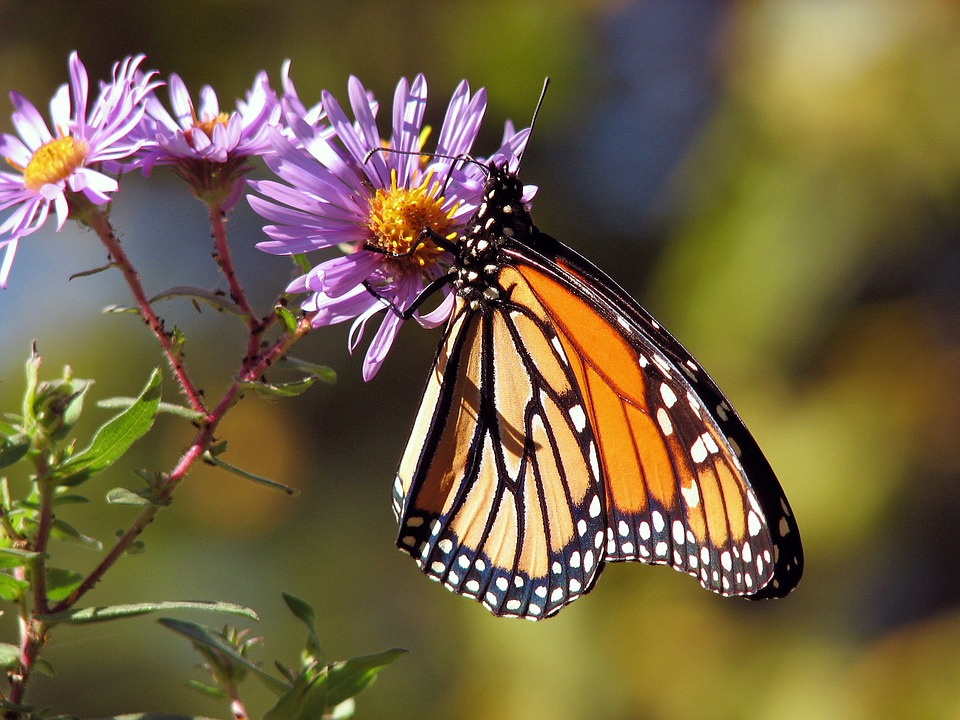
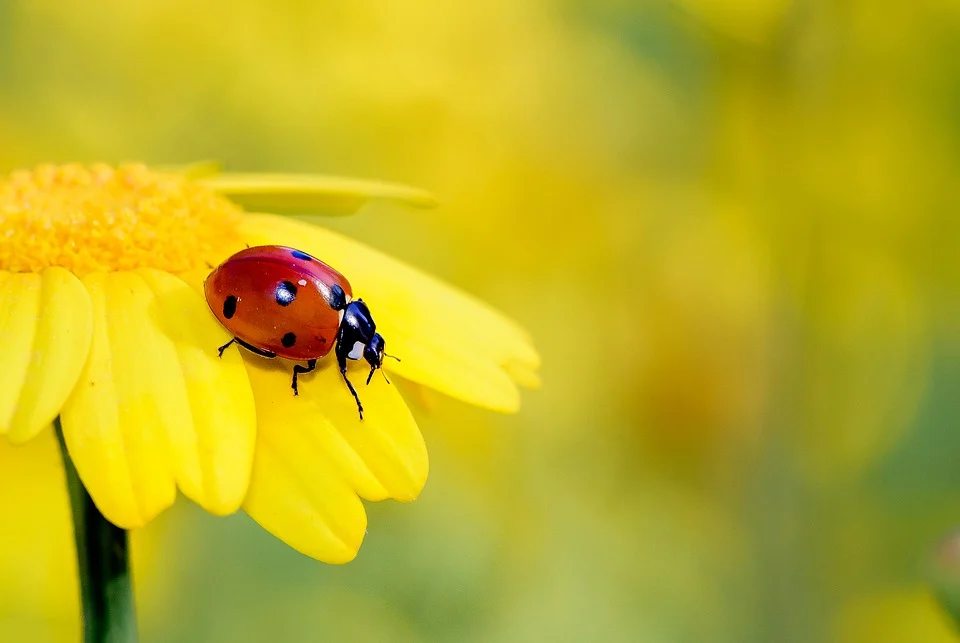
It’s tempting to pigeon-hole insects are pests that feed on plants and flowers. Of course, the reality is that certain bugs are predators and eat the insects that cause chaos in your garden. By putting down poison or spraying your yard with natural insecticides, you discourage the likes of spiders, ladybugs, and Praying Mantids from making a home on your land. Once this happens, the pest population will skyrocket and your garden will be a free-for-all. Rather than letting aphids and caterpillars annoy, rest easy in the knowledge that toads, frogs, and birds are regulating the numbers. Always consider this when you plant seeds that are designed to keep pests away as they’ll do the same to the predators.

Pixabay – CC0 Licence

Your Flowers Need Them To Grow

Picture the scene. You’re chilling out in your garden and a big wasp starts buzzing around your head. Instinctively, you attempt to shoo it away as you don’t want it to freak out and sting you. Some people hate wasps so much that they’ll actively discourage them from visiting their gardens, which is a big mistake. Whether it’s a wasp or bee, both are essential pollinators. Without either, your garden will struggle to look as stunning, and that’ll frustrate you even more!

Gardening Should Be Relaxing

You don’t enjoy gardening because it’s tough. Sure, it gets challenging from time to time, and it’s rewarding, but typically, you prefer to sit back and enjoy the fruits of your labor. Therefore, there’s no point in fretting over bugs, some of which are vital to your garden’s ecosystem. Do what you can to protect your lawn and plants from intruders, but don’t lose sleep over it. After all, it’s counterproductive and will only increase your stress levels. Gardening Companion didn’t teach you the ropes so that could harm your mental health?

Do you let pests get on your nerves? Will you try and let go?

The post Why You Shouldn’t Let Garden Pests Bug You appeared first on Miss Smarty Plants.


from Miss Smarty Plants https://ift.tt/2X8chqw

Wednesday, July 29, 2020

Frank gets his landscape back—and then some

As the gardening team at Buffalo’s Darwin Martin House—really a campus with seven structures on it—enters its second year of planting and maintaining the original landscape Frank Lloyd Wright planned with the Martins, some areas look like they’ve been established for years. Others—including the distinctive Floricycle (above), a sweeping semicircle of plants that repeat and provide four seasons of interest—are still in their adolescence. Even the Floricycle has progressed significantly since I first wrote about it last year (see below, a bit earlier in the season), though it’s still not ready for prime time, unlike the lush plantings of ferns, hydrangeas, Baptisia, and a variety of easy-growing perennials. This landscape deteriorated and eventually disappeared when the estate was abandoned in the thirties, and it is the last element to be restored.

Because of their historic connections with the house, some plants that many would hesitate to install—like Dutchman’s Pipe (above) and Japanese wisteria, have been propagated from original cuttings. Other choices include lilac, spirea, dittany, phlox, lily of the valley, and mock orange—all popular favorites during Isabelle Martin’s time. Most of these horticultural selections were made by Wright’s landscaping expert, Walter Burley Griffin. The nice thing about this landscape is that it provides several types of plantings—walkway borders, square beds, courtyard beds—that can serve as models for aspiring gardeners looking for ideas and plants that are relatively easy to grow and maintain.

Summer visitors to the grounds can also enjoy the pops of vivid color provided by seven large ceramic sculptures by Japanese artist Jun Keneko. It takes tons of clay to make some of these; the artist is renowned for making some of the world’s largest ceramic artworks.

As you can imagine from these photos, the sculptures, which are not there permanently, have created a bit of controversy. Some of the not-very-imaginative critiques have centered on what body parts they resemble and how much Wright would have detested them. I love them. For me, they provide perfect complements to the largely earth-toned campus and its understated, emerging landscape. They also force visitors to walk the entire grounds to find them all. Public art projects like this have been key to making our regained appreciation of outdoor life more about discovery and less about safety. Would Wright have approved? I suppose not. But he might appreciate the devotion, more than 100 years later, that the staff and volunteers of this property are showing to his legacy, which includes finding new ways to keep things exciting.

If you’re really interested, download a PDF that documents the entire history of this.

Frank gets his landscape back—and then some originally appeared on GardenRant on July 29, 2020.

The post Frank gets his landscape back—and then some appeared first on GardenRant.


from GardenRant https://ift.tt/2X7jmaY

Friday, July 24, 2020

Color Update with Paint, Plants and Wall Art

Thank you all for your many color suggestions for my front garden, in comments to this post. I love those colors, too!

But I had to choose, and for an accent color against the house, including parts of the house itself, it had to be a color approved by my coop.

Luckily there IS one I love, having seen it on a couple of whole houses recently – the mint green above. So far, I’ve used it on my house numbers and the pole holding up the front porch. Soon my overhead porch light will be replaced and at that time I’ll have the ceiling painted mint green. That should brighten up the doorway.

Though I agree completely that yellow is a great accent with blue, I didn’t choose it because upon reflection I realized there’s plenty of it already – in flowers and foliage.

Here’s an example – the chartreuse foliage of ‘Ogon’ Spirea up against the bland siding I had until two weeks ago. It leafs out very early and loses its leaves very late, so that color is prominent against the house at least 8 months of the year.

To its right is one of two evergreen ‘Goshiki’ Osmanthus along the front that combine greens and yellows all year.

And now in mid-summer there’s lots of gold in the garden.

Seen from the sidewalk, this is just part of a mass of ‘Goldstrum’ Rudbeckias that bloom like crazy for weeks.

So, no need for yellow in a paint can.

Something that needed color badly were these metal chairs, formerly in hot, boring black. I decided on purple and set out to the paint store to choose one that pops and suddenly spotted this fuchsia and knew I had to have it.  Enough pop for ya?

Behind the chairs you see more of the mint green – on a pole that supports wires I’m training vines on, to block my view of a parking lot. There are 7 such poles along two sides of the garden. (I’ll be posting photos of the vine progress later in the season.)

So I love the blue, mint green and fuchsia, and my neighbors tell me they do, too. So far, so good. But where to put some purple?

Maybe on these pots. When they’re not hidden by trailing Sweet Potato Vine, they’re awfully visible. On the right, they’re decorated for winter.

Using a photo collage to test color combos.

Or maybe I’ll paint them turquoise. Good thing I don’t to decide ’til the annuals die in early winter.

Wall Art!

So now to find something fun to hang on the brick wall to the left of the door – at least during the growing season, to be replaced in the winter by a wreath.

I searched “outdoor wall art” and on Etsy I found Mrs. Browns Blooms, which sells flowers made from used tin cans. I love that they’re handmaid in a little town in the Australian Outback. Also, the flowers are cheap – around $45 Australian for 17″ in diameter. That’s about $32 U.S.

Another Etsy artist shop I like is Salvage and Bloom, in Cincinnati. Also made of salvaged materials, mainly wood and metal, they cost more but it may be hard to resist.

Readers, any other ideas for garden-art shopping?

Color Update with Paint, Plants and Wall Art originally appeared on GardenRant on July 23, 2020.

The post Color Update with Paint, Plants and Wall Art appeared first on GardenRant.


from GardenRant https://ift.tt/3fYTFki

First Lady Jill Biden and the White House Garden

Now that almost everyone concedes that the Bidens will be moving into the White House soon (hopefully, soon enough!), local garden writers ...