Wednesday, August 12, 2020

The Domoto Legacy: Plants and Immigration

Such was the size of the nursery operation that the San Francisco Call Bulletin in 1913 called the Domoto Brothers Nursery the largest in the state. Photo Credit: https://ift.tt/3gSpNq5

When I was growing up, the narrative of North American horticulture, especially ornamental horticulture, was through the prism of a Euro-centric, if not Anglophilic lens. It was not through the perspective of an immigrant one. There was little or no acknowledgment of horticultural legacy that immigrants left in the U.S., even in the annals of horticultural history in my university curriculum. What I learned instead was how early American botanists and nurserymen fulfilled the British hunger for New World plants, especially its trees and shrubs in the 18th century, or the popularity of Japanese plants was closely tied to the Japonisme, the craze for Japanese arts and culture in western Europe and United States. Whether for the prevailing xenophobic attitudes, lack of documentation, or its perceived irrelevance in history, the contributions of immigrant communities have not been acknowledged consistently in a significant way. Last year on my trip to visit gardens and nurseries in the Bay Area, I learned that the old greenhouse ranges we spotted in Richmond were once used for growing roses and carnations. The greenhouses had a sad, forlorn, look of what once had been thriving businesses, although the glimpse of a few roses growing and flowering against such adversity was a bright moment. However, it scarcely occurred to me to connect these greenhouses with the Japanese American community.

Toichi Domoto set up his 26-acre nursery across the San Francisco Bay in Hayward after returning from his studies at University of Illinois, Urbana-Champaign in 1926. He would continue the rest of his life at the nursery, devoted to breeding camellias, tree peonies, and flowering quince (Chaenomeles). Photo Credit: Courtesy of Domoto Family from A Japanese-American Nurseryman’s Life in California: Floriculture and Family, 1883-1992.

Asian immigrants, especially Japanese Americans, in California oversaw farms and nurseries because these economic endeavors thought to be less threatening to whites. In Northern California, the East Bay and the current ‘Silicon Valley’ (San Mateo, Mountain View, Redwood City), became the hubs for these horticultural businesses since real estate was (and still is today) expensive in San Francisco. With its sunny days and cool nights, the climate was ideal for growing plants. In addition, the expansion of the railroad system in the region meant convenient and direct links to San Francisco where sales were conducted.

Kanetaro Domoto, the co-proprietor of the Domoto Brothers Nursery and father of Toichi Domoto, immigrated with his brothers from Wakayama, Japan and purchased land for the nursery in 1902. Kanetaro and his brothers were able to own land before the Alien Land of 1913, which forbade immigrants from property ownership, took effect. Photo Credit: Courtesy of Domoto Family from https://ift.tt/3gSpNq5

Among the Japanese American nurseries in the Bay Area that caught my attention was the largest and most influential one, the Domoto Nursery. Whereas other nurseries were largely preoccupied with growing cut flowers like chrysanthemums, roses, and carnations, the Domoto Nursery was one of the few concentrating on ornamental plants for gardens and landscapes. It too was a major conduit through which plants new to American horticulture were introduced and popularized. Kanetaro and Takanoshin Domoto, the two brothers who immigrated from Wakayama, Japan, had started the business in 1885. The Domoto Nursery soon gained the nickname ‘Domoto College’ for the multitude of young men trained and employed there before opening their businesses as well. At its height, the nursery spanned 40 acres; the San Francisco Call in February 1912 noted that the greenhouses covered 230,000 square feet and the shed 300,000 square feet.  The economic woes of the Great Depression severely affected the Domoto Nursery, leading to its foreclosure and its re-possession of the land in 1936 by the city of Oakland. If Kanetaro was concerned about the nursery’s legacy consigned to anonymity of time, he hadn’t need to worry. His eldest son Toichi carried on the family tradition, cementing the Domoto name farther into history.

Nursery and Seed Trade Catalog Collection

Raised in the family business from a young age, Toichi never envisioned that he would follow his father into the same profession. He had gone to Stanford University in 1921 to study mechanical engineering, but later transferred to University of Illinois Urbana-Champaign for horticulture. Toichi had realized that career opportunities outside of the agricultural and horticultural industry were limited to those of Asian ancestry. Reflecting upon his childhood among the plants, he said matter-of-factly, if not a bit resignedly: “For me that’s all there was to do. When I was small, I played in the Domoto Bros nursery. As I grew up in the nursery. Later I started my nursery.”

Among the plants that the Domoto Brothers Nursery grew and sold were more than 200 varieties of chrysanthemum. The woodprint illustration of this pink and white chrysanthemum is from the Japanese nursery, which the Domoto Brothers Nursery used to import plants regularly for their business. Photo Credit: USDA National Agricultural Library’s Henry G. Gilbert Nursery and Seed Trade Catalog Collection

When Toichi returned to California in 1926 after college, he purchased 26 acres in Hayward to start his nursery. The site was ideal for its water and fertile soil while the real estate prices were affordable. Through a series of bartering for building materials and plants and financing from the principal, Toichi slowly built his nursery from the ground up (during the Depression, he had less than three dollars some days to feed his family from his selling gladiolus flowers in San Francisco; food was scarce). However, the nursery’s development was sadly interrupted when the US President Franklin D. Roosevelt signed the Executive Order 9066 that ordained the internment of German, Italian, and Japanese Americans in camps. Sensing the imminent arrival of authorities for their forced relocation, the Domotos left the nursery in the care of an employee and moved inland to Livingston in hopes of delaying their inevitable transfer to the camp. Eventually the family was split up, with some in Amache Relocation Center in Colorado and a few returning to Japan. His father, already broken emotionally from the foreclosure of Domoto Nursery, later died at camp, as did another uncle who had been relocated to Milwaukee. Released momentarily through a sympathetic camp administrator, Toichi had to pay a guard to escort their ashes to the family gravesite in California.

The 1896 catalog of Domoto Brothers Nursery featuring ‘Pride of Japan’, which features roses, chrysanthemums, pelargoniums, palms and ferns, tree peonies etc. in its pages. Photo Credit: USDA National Arboretum Agricultural Library’s Henry G. Gilbert Nursery and Seed Trade Catalog Collection.

With time for breeding and propagating squandered to internment, Toichi recovered what he had lost and reassumed the nursery work. Because anti-Japanese sentiment was still high after WWII, he was considerate of his presence affecting the business of the nurseries he sought for plants. The plant orders were retrieved early mornings before the nurseries were open for their customers; for instance, his truck would arrive promptly at 6 am to pick up the camellias from Nuccios Nurseries, which was a ten-hour round trip from Hayward to Altadena and back.

Toichi and Alice Domoto who married in August 1940. Together they had two children, Marilyn and Douglas. Marilyn later taught Japanese after doing a two-year study aboard program in Japan while at Stanford, and later studying it in Columbia. Douglas become a doctor based in St. Louis, Missouri. Courtesy of Domoto Family from A Japanese-American Nurseryman’s Life in California: Floriculture and Family, 1883-1992.

One silver lining of being away in internment camp was that the seedlings in the peony fields (5-acres) had matured and were flowering, allowing Toichi to evaluate and keep the promising ones. When Toichi began to concentrate on tree peonies, breeding them was still in its infancy. Although tree peonies could be easily bought from nurseries, they were largely imported from Japan and Europe where flowering plants could be bought inexpensively and marked up once arrived in US. The few people engaged in hybridizing and selecting tree peonies commenced their programs around the same time Toichi became interested; among them was Professor A.P Saunders, still regarded the most successful and prolific breeder of peonies who only named 1 percent of his seedlings, whom Toichi corresponded in letters. Saunders was encouraging of his efforts: ‘You’re a young man yet. Plant as many seeds as you can, and see what you get.” Another individual was Roy Klehm who graciously advised on propagation difficulties, especially with grafting since Toichi was experiencing problems with poor quality rootstocks. Klehm himself had visited the peony fields at the Hayward nursery. In addition to the tree peonies acquired from Japan, Toichi imported the yellow peonies from Victor Lemoine of Lorraine, France; Lemoine had crossed Paeonia lutea with Paeonia suffruticosa to broaden the color range and his cultivars, like ‘Alice Harding’ and ‘Chromatella’ are still cultivated today. Most of the tree peonies today attributed to Toichi’s breeding were named and registered by Roy Klehm, but the best one ‘Toichi Ruby’ has won superlatives from tree peony fanciers for its rich rose red color, fragrance, and clean foliage.

Camellia reticulata ‘Captain Rawes’ was the first reticulata camellia introduced to Europe in 1820 and when the plant flowered a few years later, it was used as the type specimen to describe the species. Toichi Domoto was the first to import ‘Captain Rawes’ from the Hillier Nurseries, Winchester, UK, succeeding only on the second attempt with grafted plants.

Given their slow maturity and lengthy propagation, tree peonies alone were not lucrative for the nursery to sustain itself. Camellias became the bread and butter because they were becoming popular as plants and cut flowers (camellia corsages accounted for a portion of the nursery income during the first three to four years). One of Domoto’s significant introductions to US for his breeding was Camellia reticulata‘Captain Rawes’, which had been grown in Europe for over a century by that time. Imported from China by its namesake to UK, ‘Captain Rawes’ did not flower in a greenhouse until 1826. This plant became the type specimen (the sample that taxonomists use to describe a new species) on which the botanist John Lindley recognized Camellia reticulata in the Botanical Register (1827). In 1936, Domoto imported scions of ‘Captain Rawes’ from the Hiller Nurseries, Winchester, UK, but his grafts nearly all failed, forcing him to request another shipment of grafted plants instead. Seeing that the grafted plants from Hillier’s were side and whip grafts rather than the cleft grafts popular in US, Domoto broadened his perspective on grafting camellias. Reticulata camellias are uncommon in gardens, given their large size (plants can reach up to 50’ in the wild), propagation difficulties, and winter hardiness. When pressed for these camellias’ lack of popularity, Domoto remarked: ‘It’s a big flower, and it’s a rangy-looking plant. You really don’t get the full impact of these varieties until the plant gets good-sized, in order to make any show’. He had hoped to capitalize on their brief popularity but was unable to produce saleable plants in time. On the other hand, his work with the fall-flowering Camellia sasanqua was successful. Its smaller and tighter growth, evergreen foliage, and vibrant flower colors were attractive attributes that possessed enormous potential for good garden plants. ‘Dwarf Shishi’, a seedling of the well-known ‘Shisi-Gashira’, was acclaimed for its compact, slow growth and large dark pink flowers.

The camellia listings by color in Domoto Nursery (Hayward) wholesale list. Photo Credit: USDA National Arboretum Agricultural Library’s Henry G. Gilbert Nursery and Seed Trade Catalog Collection.

Toichi continued to work with camellias throughout his life, and one of his lifelong friendships was with Julius Nuccio, the co-proprietor of Nuccios’ Nurseries in Altadena, California. Julius and his brother Joe were Italian Americans who developed a burgeoning interest in azaleas and camellias from their parents’ back garden into a full-fledged 40-acre nursery. Julius and Toichi had met through a mutual friend who was a train express messenger fanatical about camellias. When Julius and his wife traveled up to San Francisco, Toichi and Alice would entertain them at their home –likewise the Nuccios would reciprocate the hospitality in Los Angeles. Decades later Toichi still recalls the boisterous Italian American dinner that Julius’s mother had prepared, calling it the best Italian dinner he and his wife had eaten. When pressed for possible cultural misunderstandings between the Japanese Americans and Italian Americans, Toichi acknowledged the potential for conflict, but pointed that both groups were on equal footing due to their mutual experiences they faced from discrimination. In fact, Julius’s childhood neighbors were Japanese, and there were frequent shared meals at each other homes. Today Nuccio’s Nurseries sells a seedling named after its namesake breeder ‘Toichi Domoto’, a formal double rose pink flower with dark pink stripes.

A selection of camellia flowers featured in the Domoto Nursery (Hayward) catalog. Photo Credit: USDA National Arboretum Agricultural Library’s Henry G. Gilbert Nursery and Seed Trade Catalog Collection.

Toichi’s friendship with the Nuccio family was reflective of his generous and sociable personality that made him an ascendant star in the Californian gardening scene.  The respect accorded to his knowledge and ease of working with people were affirmed when in 1957 Domoto was appointed the president of the California Horticultural Society, which counted several influential Californian horticulturists and nursery people among its members. Some of these members included Walter Bosworth (W.B.) Clarke whose breeding, selection, and propagation of woody plants, like his namesake Prunus mume and magnolias at the San Jose nursery enriched gardens, San Francisco-based plantsman and nurseryman Victor Reiter of Geranium pratense ‘Midnight Reiter’, Golden Gate Park director Roy Hudson and director of Strybing Arboretum (now SF Botanical Garden) Eric Walther. The society was formed to gather and compare information on hardiness after the Great Freeze of 1932, which caused widespread losses of specimen plants and collections in gardens. At the jovial society meetings, the members would bring in new plants, discuss their growing requirements and their use in gardens and parks. Domoto provided valuable insights as he was outside of the cool ‘fog belt’ of San Francisco where some members resided, and he stepped in with specimen plants for the society’s annual exhibit at the Oakland Spring Garden Show. The Californian Horticultural Society (https://calhortsociety.org) still exists and holds their monthly meetings at the San Francisco County Fair Building.

If there was one social activity that Toichi refrained from partaking, it was visiting the gardens of his customers, many of whom were wealthy and enthusiastic about plants. He felt strongly that gardens were private domains, not vehicles for ego: “[A] person puts a garden in and you don’t like to have every Tom, Dick and Harry. The thing is, that the people that you should like to have come in are the ones that respect that. The ones that you would just as soon not come in are the most brazen that come in.” The one garden that Toichi did have a close professional relationship with was the country estate of Mr. William P. Roth and Mrs. Lurline Matson Roth, heiress to the Matson Navigation Company, Filoli. Enlisted by the previous owners the Bourns who had built the estate, the landscape designer Bruce Porter already had laid out the formal garden between 1917 and 1922; Isabella Worn the horticulturist oversaw the plantings and their maintenance. When Mrs. Roth later became more interested in azaleas, camellias, and rhododendrons, she had Worn visit Domoto Brothers and later Toichi’s Hayward nursery to select and pick up plants. It was through Toichi on his first visit to Filoli did Mrs. Roth reveal her desire to see Filoli preserved as a public garden. Mrs. Roth’s confession and acknowledgement of her mortality may have encouraged him to consider the future of his nursery.

When Toichi realized that his two children, Marilyn and Douglas, were not interested in inheriting the nursery, he began to downsize his business by phasing out his nursery stock. Several dozen camellia seedlings were sent to Nuccio’s Nurseries for evaluation. Downsizing the nursery proved wise because he was able to relax unburdened and maintain his passions in breeding plants. His energies never faltered into his nonagenerian years, although health issues later forced more confinement in bed at home. Every morning at 5 am, he would wake up and go about his routine watering, feeding the cats, reading the newspapers and magazines.

Toichi Domoto captured during the 1992 oral interview, graciously funded by his colleagues and oversaw by the oral history recorder Suzanne Riess. A Japanese-American Nurseryman’s Life in California: Floriculture and Family, 1883-1992.

For someone who experienced racial and societal injustices, Toichi Domoto was remarkably gracious and optimistic. He betrayed no hint of anger or bitterness when reflecting on his significant achievement, which was anything but horticultural:

“Having gotten along with my friends in life, and having gained their respect. I feel that more than anything else, human relations…But the fact that I got to know certain people real well, intimately, so that regardless of their color or race or religion, I knew them as a person, I think that was—those are the two things that I really cherish more than anything else.”

Domoto poignantly added: “When you are out working with plants and flowers, you can’t have hate in your heart.”


Eric Hsu is a writer (his blog is www.plinthetal.com) and gardener with interests in bulbs and woody plants; in addition he is the plant information coordinator at Chanticleer.


Growing Community: Pioneers of the Japanese American Floral Industry. Retrieved August 1, 2020 from www.janurseries.com

Toichi Domoto, “A Japanese-American Nurseryman’s Life in California: Floriculture and Family, 1883-1992,” an oral history conducted in 1992 by Suzanne B. Riess, Regional Oral History Office, The Bancroft Library, University of California, Berkeley, 1993.

Nuccio. J. (1995). A tribute to Toichi Domoto. The Camellia Review 57(2): 10-11.

Schmidt, W. (1969). Toichi Domoto, Nurseryman: Over sixty years’ experience with flowers. California Horticultural Journal 30: 66-73.

Ukai, N. (n.d.). The Domoto Maple: Bonsai Part I. Retrieved August 4, 2020, from The Domato Maple: Bosai: Part I

The Domoto Legacy: Plants and Immigration originally appeared on GardenRant on August 12, 2020.

The post The Domoto Legacy: Plants and Immigration appeared first on GardenRant.


from GardenRant https://ift.tt/2PNCir0

Tuesday, August 11, 2020

My plants are happier without me

Like many, I’ve been working at home since March and, for the most part, enjoying it. But I do go to the office once in a while to pick up mail (so I can throw it out immediately) and water my office plants. The thing is, most look better than they ever did when I was there, including a huge monstera I bought a year ago to replace a faltering dracaena. It is putting out so much bright-green new foliage that I cut away some big stalks at the bottom that looked like they were nearing the end of their life cycles. (I wonder if the lack of artificial light is helping?) I put them in a vase—see above—so I could vicariously enjoy my beautiful plant. Unless I bring it home, I won’t be sharing space with it again for months.
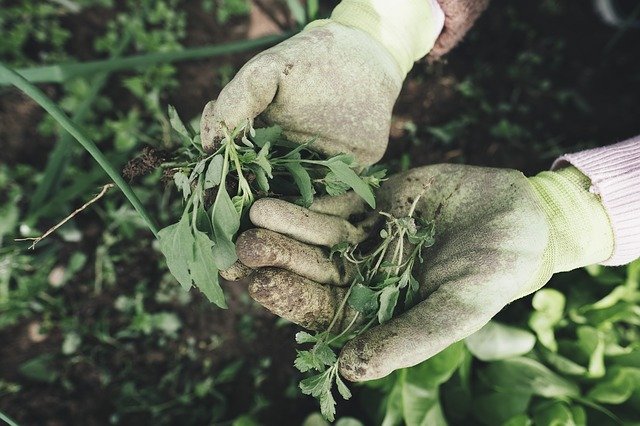
I wish I could convince other gardeners I know that their plants mainly just want them to leave them alone. “Benign neglect” is what my late mother-in-law prescribed for orchid care and, as much as possible—I try to carry out that maxim in the outdoor garden. Weeding is one thing and pot watering is another, but, other than that, I mainly do more harm than good when I wade into the perennial beds. Oops, there goes another daylily bud. Hmmm, wish I could stop crushing this blue-stem goldenrod.

However, the ability to instantly display images of plants on social media—we all do it and love it—has led to lots of “what’s wrong with this and what should I do?” With many of them, my choice would have been to simply remove the offending stalk or leaf—it is often just one leaf, with some minor defect hideously magnified by a closeup image. Out of sight, out of mind, right? If the problem expands, then maybe best to cut back or get rid of the whole plant. I have never found any store-bought remedy—not to even mention the homemade ones—that I have used for anything wrong with my plants to actually work. That may sound drastic, but it’s true. Remove the bad bugs you can see, ignore the ones you can’t, and get rid of the worst weeds. There are plenty of other things in life to worry about.

My plants are happier without me originally appeared on GardenRant on August 11, 2020.

The post My plants are happier without me appeared first on GardenRant.


from GardenRant https://ift.tt/3iBv3ix

Monday, August 10, 2020

A Simple Guide To Removing Pests From Your Garden

The post A Simple Guide To Removing Pests From Your Garden appeared first on Miss Smarty Plants.

Picture

Are you worried about planting a new garden this summer because you tend to have lots of pests in your local area? Do you want to avoid wasting money on plants and flowers only to discover bugs and insects are eating them? Then take a few minutes to read this post, and put some of the advice to good use. 

At the end of the day, there are always going to be some pests you won’t catch. However, there is also a lot you can do to protect your plant life and ensure the chances of pests becoming a significant problem are slim. 

Controlling Lubber grasshoppers

Use organic pesticides

Many people are concerned about using pesticides in their garden for good reason as you can learn if you click here or online. The chemicals used in some solutions can be harmful to humans, and they could also damage your outdoor space. Thankfully, there are lots of organic pesticides on the market these days that are much safer than the alternatives, and so you just need to select the right one for you. 

Take some time to read online reviews, and check forum posts from avid gardeners for tips and advice too. In most instances, you only have to use the pesticide once or twice to keep those unwanted creatures away from your beautiful plants and flowers. So, it’s not a time-consuming job, but it could make all the difference. 

Invest in a mole repellent

Lots of people have issues with moles in their gardens and vegetable patches, and that is especially the case if you live near to farms or open land. There are hundreds of different ways folks will tell you to get rid of moles, and many of them will not produce the desired results. 

Still, you can read here or search online to learn more about specialist products that will get rid of moles without damaging the environment or causing any harm to the creature. Sound waves are a useful tool for encouraging small animals and rodents to move away from an area, and there are some fantastic sonic mole repeller products available these days. 

Check for infested plants

Lastly, and perhaps most importantly, you need to keep a close eye on all the plants in your garden. If one flower becomes infested with pests, it will only take a couple of days for them to breed and spread to everything else in your garden. 

As with the recent pandemic, quarantine is usually the best solution. Remove the infected plant from your garden and either destroy it or place it somewhere far away from everything else. That should assist in preventing an outbreak before it has a chance to take hold. 

Use the advice from this page during the next few months, and you should manage to keep those unwanted pests and critters far away from your flower beds and lawn. Of course, new products hit the market every day, and so it’s always worth speaking to experts at your local garden centre if you have any concerns or struggle to produce the desired results. They won’t mind pointing you in the right direction! 

The post A Simple Guide To Removing Pests From Your Garden appeared first on Miss Smarty Plants.


from Miss Smarty Plants https://ift.tt/3fRv0xi

Hosed Again


In the beginning there were blessed, soaking rains. Then came the curse of the tangled hose. The Romans built aqueducts to move water around. I, on the other hand, drag two or three sections of “virtually kink proof” 50’ hoses in the summer heat, chanting the March of the Winkies O-Ee-yah! Eoh-ah from the “Wizard of Oz.”

We are bestowed, in Central Kentucky, with an abundance of 43” of rain per year, but there are stretches where we go thirsty. A couple of days of rain in late July and early August, and an accompanying brief cool down, were a tease for what a pleasant summer on the coast of Maine might be like. Kentucky, though, is ruled by heat and humidity.

There’s a reason they call these the dog days of summer. Georgia horticulturist Bobby Saul said, “It gets so dry even the large-mouth bass have ticks.”

I am not going to play god with an automatic irrigation system. I won’t entrust a coffee pot to a timer, so I’m not going to rely on a fickle control panel to turn on sprinklers at 7:30 on Tuesday morning come rain or shine. My primulas, crested iris and hardy geraniums deserve better.

What’s a gardener to do?

You need only a few simple accessories for manual watering. I’m here to make your chores a teensy-weensy bit easier.

My simple accessories: oscillating and rotary sprinklers, a watering wand and a beloved and beat-up 2-gallon Haws watering can.

Don’t coil your hose like a snake or hang it on the side of the house and call it wall art. Tidiness becomes a tantrum of snags and swearing when you unwind the mess. When you’re finished watering, bend your hose to your will—in the shape of a figure 8— but don’t expect mercy on your water bill.

The North Mercer County Water Department is a good community partner, but I knew what was coming when I saw their number pop up on my iPhone in late July. “Mr. Bush, you used a lot of water this month.” They’re setting me up for bad news and a big bill.

“Yes ma’am, I’ve been watering the garden and little trees a lot.”

The kind lady asks, “How does your garden look?”

I sugar coat my answer, “It looks great.” It doesn’t, really. The truth is: The rabbits ate my cabbage seedlings, and the flower border looks tousled and tired, but I don’t want the water department to think it’s their fault.

It’s August.

Hosed Again originally appeared on GardenRant on August 10, 2020.

The post Hosed Again appeared first on GardenRant.


from GardenRant https://ift.tt/2FdY2up

Friday, August 7, 2020

Repotting Orchids: Oncidiums

The post Repotting Orchids: Oncidiums appeared first on Miss Smarty Plants.

I’m long overdue to spend some time repotting orchids. Don’t believe me? Just look at this poor oncidium orchid! It “jumped” off the shelf last year breaking the pot, the roots are growing everywhere, and I haven’t done a darn thing about it. Until today.

repotting orchids oncidiums

I know I should be embarrassed by this, and I am, slightly! Just look at all of these roots growing out in the air! I laughed at the fact that when we were in Florida I grew my orchids in trees so I never had to repot any of them!

repotting orchids oncidiums

My first step was to remove this massive plant from its (broken) pot. It came out fairly easily and left me with a few decisions for repotting orchids.

Options for repotting orchids:

  • Leave the entire plant as one and find a larger pot.
  • For oncidiums only, I have the option to cut and split to two pots.
  • Remove older pseudobulbs (the bulbous section at the bottom of the leaf) and keep in a similar sized pot.
repotting orchids oncidiums

I decided to use a sharp knife to cut this into two parts. They are not even, but there seemed to be a natural break in here where I wouldn’t have to cut much.

repotting orchids oncidiums

I used fresh orchid bark in the bottom of the pot and to hold these orchids in place. Orchids do not use potting soil. I know this seems obvious to some, but trust me this is apparently not common sense.

repotting orchids oncidiums

I chose pots that were just large enough to jam the plants in and get a little bit of bark around the outside. Orchids like to be pot bound, so there isn’t a benefit to increasing the size more than necessary. I tucked the roots down in the orchid bark a little bit to help encourage them to grow in there. I have a feeling the previous pine bark was so broken down that they weren’t getting enough air in there before.

I left them sitting a little big high to make sure they have the oxygen they need and that the pseudobulbs are visible.

This plant hasn’t flowered in a couple of years and hopefully the time spent repotting orchids will change that this year!

repotting orchids oncidiums

The post Repotting Orchids: Oncidiums appeared first on Miss Smarty Plants.


from Miss Smarty Plants https://ift.tt/3fyaHVi

Growing a Vegetable Patch: Where to Start

The post Growing a Vegetable Patch: Where to Start appeared first on Miss Smarty Plants.

Starting a small vegetable patch is a great way to start growing things that you can eat. If you’ve never grown vegetables before, you might be unsure about where to begin. Maybe you’ve attempted it before, but you didn’t have much luck, and you want to make sure you get it right this time. Even beginners can have great success with growing vegetables if you know the key things that you need to do. It doesn’t take much to get started with a small patch. If you’re thinking of starting a vegetable patch, follow these steps to start growing vegetables that you can actually eat.

Find the Right Spot

Planting your vegetables in the right place is essential. Where you put your vegetable patch will depend on what you intend to plant. Some crops do best when they’re slightly in the shade, while others need plenty of sunshine. However, what you shouldn’t do is plant your vegetables under a tree or in heavy shade. If you do this, your plants are unlikely to thrive because they won’t be getting enough light. Choose a plot that’s on level ground and gets enough sunshine, as well as one that is perhaps conveniently close to a water butt.

Choose the Right Plants

There are various things that you can plant on your vegetable patch. Some will be easier to grow than others, so be careful about what you choose if you’re a beginner. To successfully grow your own food, look at vegetables that are easy to grow like chilies, potatoes, beans and zucchinis. It’s also a good idea to choose crops that complement each other and grow well together. Choose the right plants, and they can help to protect each other, preventing pests and other problems. Start with just a few plants, and you can always expand later if you have space.

Image from Pixabay – CC0 License

Design Your Plot

Instead of going in without a plan, it’s useful to design your plot so that you know what will go where. Think about what you want to plant and where you want to plant it. If you plan to have them in groups of four, you can rotate them to help prevent pests and disease. Write down the crops that you want to plant and create a drawing of how you want to plant them. Make sure that you don’t plan to make your vegetable plot too crowded. You need to leave space for everything to grow.

Prepare Your Soil

The right soil is essential for growing vegetables. You can check your soil by doing a pH test, which will tell you how acid or alkaline it is. You should have neutral soil for growing vegetables if you want to have the most success. For advice on what you should be using, it can be helpful to speak to someone at your local nursery or garden center. Raised beds might be better if the local soil isn’t right for growing.

If you want to start a vegetable patch, get the basics right so that you can successfully grow your crops.

The post Growing a Vegetable Patch: Where to Start appeared first on Miss Smarty Plants.


from Miss Smarty Plants https://ift.tt/30EJ4Wy

Anyone Else Forgetting to Be Freaked Out about Lyme Disease?

Back in May of 2018 I ranted about the “New Look for Gardeners Freaked out about Lyme Disease” using this image of a hazmat suit for yucks to illustrate the get-up I was using to prevent tick bites and potentially Lyme Disease.

Not so funny now that we’re accustomed to seeing people outfitted like this:

Dr. Clayton McCarl, dentist in Greenbelt, Md.

Or like this dentist – my dentist. He sent me the photo to illustrate a story I wrote about how his practice has responded to COVID.  (I’m too nervous to keep my own cleaning appointment. Trying to stay gum-healthy on my own.)

But about ticks, that post ended with “What, if anything, can I do in the garden without gearing up in protective clothing? Having found no answer to that question, here’s my plan: Just water. Touch no plants. Which makes this gardener just so sad.”

Well, of course I DON’T gear up in PPE every time I touch a plant. This year I’ve only been gearing for major projects like moving plants or getting in the middle of shrubs to prune them.

So how’s that been working out for me? I’ve had 5 tick bites so far – that I’ve found! So I called my primary care doc and she prescribed a one-time dose of doxycycline, with enough for four more bites. Here’s the idea:

An antibiotic taken within 72 hours of being bitten by a deer tick carrying Lyme disease can prevent people from developing the illness. Only about 3% of people who are bitten by ticks will develop Lyme disease, which is characterized by persistent fatigue and pain.

3 percent! I like those odds.

But more googling reveals that not all docs are prescribing it:

In [a] study of nearly 500 adults, a single dose — two pills — of the antibiotic doxycycline taken within 72 hours of being bitten was 87% effective in preventing Lyme disease. But because the antibiotic treatment causes side effects like nausea and vomiting in about 30% of people, experts say doctors shouldn’t give it unless the person is fairly certain the tick that bit them was fat — as opposed to flat, meaning it was somewhat engorged — and that it was indeed a tick.

Of course it’s chronic Lyme Disease that scares the bejesus out of me.

A small percentage of people who do contract Lyme disease will continue to have symptoms such as fatigue, arthritis, muscle and joint pain, and mood and memory problems after undergoing the standard 10- to 21-day course of antibiotics. Some doctors treat this “chronic” Lyme disease with long-term antibiotics, but few studies have shown the treatment to be effective.

Reading this again does calm me down a bit – especially in light of the much more serious disease I’m hearing about every waking minute of every day.

But if I DID want to up my game this year and do a better job of avoiding ticks, these get-ups don’t look so awful.  Again, compared to medical PPEs.

Lyme Vaccine on the Horizon!

This post was prompted by the news of a vaccine against Lyme crossing my Facebook feed last week, which seemed to promise a safer, less freaked-out life for us gardeners.

Well, that happy bubble lasted until the end of the VERY FIRST SENTENCE:

A vaccine against Lyme disease has been shown to be safe and effective in a clinical trial and could be available by 2025.

So the prediction is for four more years of worrying about Lyme and even worse, extrapolating that whiplash of good-to-bad news to the future of a vaccine for COVID-19.

On that note, I’m gonna go garden.

PEE photo credit: Johnson and Johnson.

Anyone Else Forgetting to Be Freaked Out about Lyme Disease? originally appeared on GardenRant on August 7, 2020.

The post Anyone Else Forgetting to Be Freaked Out about Lyme Disease? appeared first on GardenRant.


from GardenRant https://ift.tt/31p6UVg

First Lady Jill Biden and the White House Garden

Now that almost everyone concedes that the Bidens will be moving into the White House soon (hopefully, soon enough!), local garden writers ...