Like many, I’ve been working at home since March and, for the most part, enjoying it. But I do go to the office once in a while to pick up mail (so I can throw it out immediately) and water my office plants. The thing is, most look better than they ever did when I was there, including a huge monstera I bought a year ago to replace a faltering dracaena. It is putting out so much bright-green new foliage that I cut away some big stalks at the bottom that looked like they were nearing the end of their life cycles. (I wonder if the lack of artificial light is helping?) I put them in a vase—see above—so I could vicariously enjoy my beautiful plant. Unless I bring it home, I won’t be sharing space with it again for months.
I wish I could convince other gardeners I know that their plants mainly just want them to leave them alone. “Benign neglect” is what my late mother-in-law prescribed for orchid care and, as much as possible—I try to carry out that maxim in the outdoor garden. Weeding is one thing and pot watering is another, but, other than that, I mainly do more harm than good when I wade into the perennial beds. Oops, there goes another daylily bud. Hmmm, wish I could stop crushing this blue-stem goldenrod.
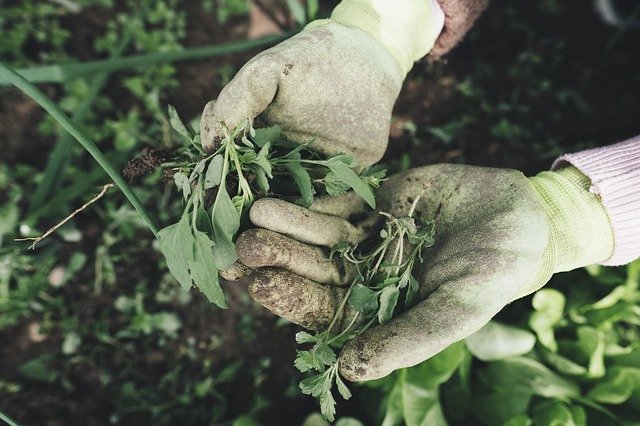
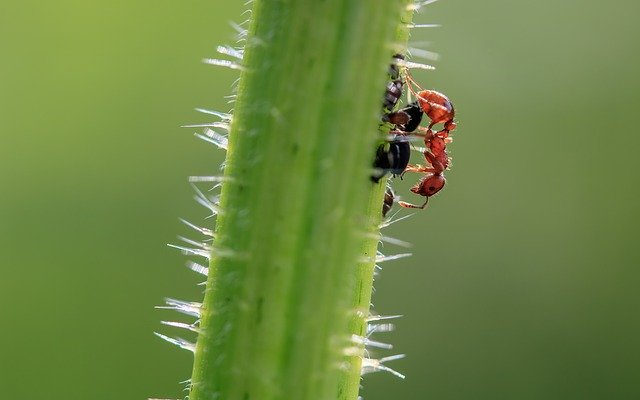
However, the ability to instantly display images of plants on social media—we all do it and love it—has led to lots of “what’s wrong with this and what should I do?” With many of them, my choice would have been to simply remove the offending stalk or leaf—it is often just one leaf, with some minor defect hideously magnified by a closeup image. Out of sight, out of mind, right? If the problem expands, then maybe best to cut back or get rid of the whole plant. I have never found any store-bought remedy—not to even mention the homemade ones—that I have used for anything wrong with my plants to actually work. That may sound drastic, but it’s true. Remove the bad bugs you can see, ignore the ones you can’t, and get rid of the worst weeds. There are plenty of other things in life to worry about.
Are you worried about planting a new garden this summer because you tend to have lots of pests in your local area? Do you want to avoid wasting money on plants and flowers only to discover bugs and insects are eating them? Then take a few minutes to read this post, and put some of the advice to good use.
At the end of the day, there are always going to be some pests you won’t catch. However, there is also a lot you can do to protect your plant life and ensure the chances of pests becoming a significant problem are slim.
Use organic pesticides
Many people are concerned about using pesticides in their garden for good reason as you can learn if you click here or online. The chemicals used in some solutions can be harmful to humans, and they could also damage your outdoor space. Thankfully, there are lots of organic pesticides on the market these days that are much safer than the alternatives, and so you just need to select the right one for you.
Take some time to read online reviews, and check forum posts from avid gardeners for tips and advice too. In most instances, you only have to use the pesticide once or twice to keep those unwanted creatures away from your beautiful plants and flowers. So, it’s not a time-consuming job, but it could make all the difference.
Invest in a mole repellent
Lots of people have issues with moles in their gardens and vegetable patches, and that is especially the case if you live near to farms or open land. There are hundreds of different ways folks will tell you to get rid of moles, and many of them will not produce the desired results.
Still, you can read here or search online to learn more about specialist products that will get rid of moles without damaging the environment or causing any harm to the creature. Sound waves are a useful tool for encouraging small animals and rodents to move away from an area, and there are some fantastic sonic mole repeller products available these days.
Check for infested plants
Lastly, and perhaps most importantly, you need to keep a close eye on all the plants in your garden. If one flower becomes infested with pests, it will only take a couple of days for them to breed and spread to everything else in your garden.
As with the recent pandemic, quarantine is usually the best solution. Remove the infected plant from your garden and either destroy it or place it somewhere far away from everything else. That should assist in preventing an outbreak before it has a chance to take hold.
Use the advice from this page during the next few months, and you should manage to keep those unwanted pests and critters far away from your flower beds and lawn. Of course, new products hit the market every day, and so it’s always worth speaking to experts at your local garden centre if you have any concerns or struggle to produce the desired results. They won’t mind pointing you in the right direction!
In the beginning there were blessed, soaking rains. Then came the curse of the tangled hose. The Romans built aqueducts to move water around. I, on the other hand, drag two or three sections of “virtually kink proof” 50’ hoses in the summer heat, chanting the March of the Winkies O-Ee-yah! Eoh-ah from the “Wizard of Oz.”
We are bestowed, in Central Kentucky, with an abundance of 43” of rain per year, but there are stretches where we go thirsty. A couple of days of rain in late July and early August, and an accompanying brief cool down, were a tease for what a pleasant summer on the coast of Maine might be like. Kentucky, though, is ruled by heat and humidity.
There’s a reason they call these the dog days of summer. Georgia horticulturist Bobby Saul said, “It gets so dry even the large-mouth bass have ticks.”
I am not going to play god with an automatic irrigation system. I won’t entrust a coffee pot to a timer, so I’m not going to rely on a fickle control panel to turn on sprinklers at 7:30 on Tuesday morning come rain or shine. My primulas, crested iris and hardy geraniums deserve better.
What’s a gardener to do?
You need only a few simple accessories for manual watering. I’m here to make your chores a teensy-weensy bit easier.
My simple accessories: oscillating and rotary sprinklers, a watering wand and a beloved and beat-up 2-gallon Haws watering can.
Don’t coil your hose like a snake or hang it on the side of the house and call it wall art. Tidiness becomes a tantrum of snags and swearing when you unwind the mess. When you’re finished watering, bend your hose to your will—in the shape of a figure 8— but don’t expect mercy on your water bill.
The North Mercer County Water Department is a good community partner, but I knew what was coming when I saw their number pop up on my iPhone in late July. “Mr. Bush, you used a lot of water this month.” They’re setting me up for bad news and a big bill.
“Yes ma’am, I’ve been watering the garden and little trees a lot.”
The kind lady asks, “How does your garden look?”
I sugar coat my answer, “It looks great.” It doesn’t, really. The truth is: The rabbits ate my cabbage seedlings, and the flower border looks tousled and tired, but I don’t want the water department to think it’s their fault.
I’m long overdue to spend some time repotting orchids. Don’t believe me? Just look at this poor oncidium orchid! It “jumped” off the shelf last year breaking the pot, the roots are growing everywhere, and I haven’t done a darn thing about it. Until today.
I know I should be embarrassed by this, and I am, slightly! Just look at all of these roots growing out in the air! I laughed at the fact that when we were in Florida I grew my orchids in trees so I never had to repot any of them!
My first step was to remove this massive plant from its (broken) pot. It came out fairly easily and left me with a few decisions for repotting orchids.
Options for repotting orchids:
Leave the entire plant as one and find a larger pot.
For oncidiums only, I have the option to cut and split to two pots.
Remove older pseudobulbs (the bulbous section at the bottom of the leaf) and keep in a similar sized pot.
I decided to use a sharp knife to cut this into two parts. They are not even, but there seemed to be a natural break in here where I wouldn’t have to cut much.
I used fresh orchid bark in the bottom of the pot and to hold these orchids in place. Orchids do not use potting soil. I know this seems obvious to some, but trust me this is apparently not common sense.
I chose pots that were just large enough to jam the plants in and get a little bit of bark around the outside. Orchids like to be pot bound, so there isn’t a benefit to increasing the size more than necessary. I tucked the roots down in the orchid bark a little bit to help encourage them to grow in there. I have a feeling the previous pine bark was so broken down that they weren’t getting enough air in there before.
I left them sitting a little big high to make sure they have the oxygen they need and that the pseudobulbs are visible.
This plant hasn’t flowered in a couple of years and hopefully the time spent repotting orchids will change that this year!
Starting a small vegetable patch is a great way to start growing things that you can eat. If you’ve never grown vegetables before, you might be unsure about where to begin. Maybe you’ve attempted it before, but you didn’t have much luck, and you want to make sure you get it right this time. Even beginners can have great success with growing vegetables if you know the key things that you need to do. It doesn’t take much to get started with a small patch. If you’re thinking of starting a vegetable patch, follow these steps to start growing vegetables that you can actually eat.
Find the Right Spot
Planting your vegetables in the right place is essential. Where you put your vegetable patch will depend on what you intend to plant. Some crops do best when they’re slightly in the shade, while others need plenty of sunshine. However, what you shouldn’t do is plant your vegetables under a tree or in heavy shade. If you do this, your plants are unlikely to thrive because they won’t be getting enough light. Choose a plot that’s on level ground and gets enough sunshine, as well as one that is perhaps conveniently close to a water butt.
Choose the Right Plants
There are various things that you can plant on your vegetable patch. Some will be easier to grow than others, so be careful about what you choose if you’re a beginner. To successfully grow your own food, look at vegetables that are easy to grow like chilies, potatoes, beans and zucchinis. It’s also a good idea to choose crops that complement each other and grow well together. Choose the right plants, and they can help to protect each other, preventing pests and other problems. Start with just a few plants, and you can always expand later if you have space.
Instead of going in without a plan, it’s useful to design your plot so that you know what will go where. Think about what you want to plant and where you want to plant it. If you plan to have them in groups of four, you can rotate them to help prevent pests and disease. Write down the crops that you want to plant and create a drawing of how you want to plant them. Make sure that you don’t plan to make your vegetable plot too crowded. You need to leave space for everything to grow.
Prepare Your Soil
The right soil is essential for growing vegetables. You can check your soil by doing a pH test, which will tell you how acid or alkaline it is. You should have neutral soil for growing vegetables if you want to have the most success. For advice on what you should be using, it can be helpful to speak to someone at your local nursery or garden center. Raised beds might be better if the local soil isn’t right for growing.
If you want to start a vegetable patch, get the basics right so that you can successfully grow your crops.
Back in May of 2018 I ranted about the “New Look for Gardeners Freaked out about Lyme Disease” using this image of a hazmat suit for yucks to illustrate the get-up I was using to prevent tick bites and potentially Lyme Disease.
Not so funny now that we’re accustomed to seeing people outfitted like this:
But about ticks, that post ended with “What, if anything, can I do in the garden without gearing up in protective clothing? Having found no answer to that question, here’s my plan: Just water. Touch no plants. Which makes this gardener just so sad.”
Well, of course I DON’T gear up in PPE every time I touch a plant. This year I’ve only been gearing for major projects like moving plants or getting in the middle of shrubs to prune them.
So how’s that been working out for me? I’ve had 5 tick bites so far – that I’ve found! So I called my primary care doc and she prescribed a one-time dose of doxycycline, with enough for four more bites. Here’s the idea:
An antibiotic taken within 72 hours of being bitten by a deer tick carrying Lyme disease can prevent people from developing the illness. Only about 3% of people who are bitten by ticks will develop Lyme disease, which is characterized by persistent fatigue and pain.
3 percent! I like those odds.
But more googling reveals that not all docs are prescribing it:
In [a] study of nearly 500 adults, a single dose — two pills — of the antibiotic doxycycline taken within 72 hours of being bitten was 87% effective in preventing Lyme disease. But because the antibiotic treatment causes side effects like nausea and vomiting in about 30% of people, experts say doctors shouldn’t give it unless the person is fairly certain the tick that bit them was fat — as opposed to flat, meaning it was somewhat engorged — and that it was indeed a tick.
Of course it’s chronic Lyme Disease that scares the bejesus out of me.
A small percentage of people who do contract Lyme disease will continue to have symptoms such as fatigue, arthritis, muscle and joint pain, and mood and memory problems after undergoing the standard 10- to 21-day course of antibiotics. Some doctors treat this “chronic” Lyme disease with long-term antibiotics, but few studies have shown the treatment to be effective.
Reading this again does calm me down a bit – especially in light of the much more serious disease I’m hearing about every waking minute of every day.
But if I DID want to up my game this year and do a better job of avoiding ticks, these get-ups don’t look so awful. Again, compared to medical PPEs.
Lyme Vaccine on the Horizon!
This post was prompted by the news of a vaccine against Lyme crossing my Facebook feed last week, which seemed to promise a safer, less freaked-out life for us gardeners.
Well, that happy bubble lasted until the end of the VERY FIRST SENTENCE:
A vaccine against Lyme disease has been shown to be safe and effective in a clinical trial and could be available by 2025.
So the prediction is for four more years of worrying about Lyme and even worse, extrapolating that whiplash of good-to-bad news to the future of a vaccine for COVID-19.
The exclamation point is, I assure you, fully justified. After three and a half weeks without the stuff and without piped water to my sunniest gardens, I had reached a point of exhaustion and had begun the process of separation.
Last year and the year before were the years to plant trees – and I did. But this year, I finally had time to put in the thuja hedge. Now it’s being kept on life support by milk jugs schlepped up from the creek. How wonderful that the crab grass and creeping charlie seem undaunted.
I know you are familiar with this gardener’s trick of self-preservation. Just stop looking at the things that upset you so that they in effect, disappear. My inherited 100ft Long Bed currently requires a machete, pith helmet and vaccine certificate to enter, but by simply turning my head left instead of right when I exit the back door, the issue is solved until winter takes a crack at it.
Douglas Adams wrote of something similar in his Hitchhiker’s series – advocating the use of a towel over one’s head to successfully protect the wearer from seeing anything dangerous. And I am successfully using something similar with my mirror these days – you do not have that many years on me you know.
I touched upon this August feeling of exhaustion/annoyance two weeks ago on my own website – pulling no punches – only to have a subscriber withdraw her reading services, citing “Looking for something more positive.”
Oh how I wanted to reply to her – breaking no doubt, sixteen Mailchimp covenants and sworn oaths of privacy – to say “My friend and fellow gardener, this IS positive. It’s the perfectly packaged pap from the everything-is-okay-I’m-doing-awesome-having-it-all-#BestLifeEver crowd that you should be avoiding. We’re all in this together – it sure as hell helps if someone is truthful about it.”
I refrained. But I did get a giggle when Anne Wareham of The Vedww House Garden commented “Still knackered – I measure this by how many times a day I say f… off to an inanimate object.” Wonderful.
I believe you are dry in the Midwest too this year – isn’t it annoying to find ourselves more dependent on the wet stuff than we wish to be? And that’s just the vodka gin and tonics. The despair attached to a long cool spring and mostly rainless summer in a year where I am writing and photographing a book on tropical plants has necessitated a few more visits to the drinks cabinet than are advocated by those that officially advocate these things.
Fresh flowers on the drinks cabinet keeps the intoxication process civilized.
Some mornings I can feel the ghost of Beth Chatto hovering over me and my watering cans as I slop warm rainwater over sandaled, gritty toes and give Anne at The Vedww something to strive for in graduate level Creative Swearing.
Hearkening back to our discussion of gardeners you do not care to read, but don’t mind slagging off, Chatto championed the idea of planting specifically for drought tolerance. When I last visited the Beth Chatto Garden in East Anglia two years ago, they had received all of 13 inches of rain by the end of August, and the gravel garden (built over the remains of a car park) had not had a drop of supplemental water. It was a hot summer certainly, but that area of England is particularly dry in the best of years.
Beth Chatto’s Gravel Garden in August 2018
Chatto’s ghost chastises me for planting choices made in wetter years. I’d offer her a coffee, but she has so many gardeners to chastise on her morning rounds there’s no time for a chat. Should she stay, I’m ashamed to say I would begin the discussion with an excuse — having been instructed throughout my gardening career not to.
“The difficulty with my garden,” I would say (How many sentences begin thus? I have heard hundreds myself.) “is that I live in a wooded stream valley.”
She would look at me blankly – in that way the British are so good at – in the way my militant (but beloved) godmother used to – politely waiting for the actual problem. And I would instantly feel ashamed of myself and get back to water slopping and some menial weeding.
Hypothetical one-sided discussion over.
Not that I wouldn’t continue to feel sorry for myself, chastised and muttering into the crabgrass. For I am a gardener and that is what gardeners do. There is an enormous amount of energy spent feeling sorry for ourselves. A dry season, a deer feast, a late spring freeze, a child on a mower. Poor Anne and Charles at The Vedww lost one massive yew in an established hedge to a dripping tap and I want to shake my fist at the Heavens for them – I can’t imagine how cosmically wronged they feel.
Ah! The glories we could achieve were it not for [X]! The vegetables we could grow were it not for [Y]! The excuse-free year we would have were it not for [Z]! I could go on, but I have an excuse to finish illustrating for you and demons compel me…
A wooded stream valley means free draining alluvial soils worthy of a Mediterranean garden…were it not for the 90 foot tulip poplars meting out sunlight like a miserly king. And then there’s the cold air that trips and tumbles down the hillsides to pool over my expensive zone-pushers. Lavender without the sun. Ferns without the moisture. Water water everywhere and not a drop to drink…
A drone photo in May shows part of the lower garden, but more importantly, shows the surrounding woods lurking like Fangorn Forest. Minus the Ents.
It is a paradox that can only be solved by the time and effort needed to amend the soils and figure out what works and what won’t. Beyond the Japanese Stilt Grass, which couldn’t be happier.
During this dry year, it is tempting to allow the survivors to slip quietly into dormancy. With COVID bells sounding and everything off the calendar, including tours of my garden by highly opinionated gardeners tsking and tutting between mouthfuls of quiche and cheap plonk, I have questioned the need (for instance) to keep watering containerized color for my eyes only. Further existential questions such as “What is it all for?” or “Is there a purpose to all this suffering?” or “Why the hell did I wait to put in that thuja hedge until THIS year?” have been springing from my lips just as often has Anne has been abusing her inanimate objects.
Now it is you who are no doubt looking for something more positive. Forgive me. I am in an August state of mind and there is nothing like it. August will try the very soul of you. How many new, excited 20-something gardeners have met their Waterloo in August and fled back to more pleasurable ways of abusing their bodies and minds?
There I go again. This is getting grim quickly. You might as well be writing this letter. Let me attempt to redeem myself with something profound: Adversity refocuses the lens of necessity.
This perhaps is the most positive lesson coming out of all this mess, by which I mean the COVID emergency, the dry summer, and the non-stop political wars: The perspective it gives on the importance of the garden. Not the garden in a particular moment in time mind you (glorious May, damnable August), but the garden in general. The necessity of the garden.
Space to breathe, a place to think, inanimate objects to abuse without recrimination. I am very grateful for that.
I love the color and resilience of the Sombrero series of Echinacea too – Granada Gold is perhaps my favorite (though this is an early season photo), followed by ‘Baja Burgundy’‘Baja Burgundy’ Echinacea
I have also been made more aware of the things I don’t need – like that containerized color in a far off part of the garden, extra pots of cuttings to water that will never find a home this season, clearance plants at deep discounts that will cost me dearly in sweat trying to revive them during a cruel summer. It is a freeing state of mind.
I was so very thankful recently to a professional gardener on a social media page who took an honest picture of plants heading to the compost pile in the back of a truck because he hadn’t the staff to plant them, much less water them after the COVID mess. He also had zero time to find homes for them all and arrange pick up etc… (yes, this takes time!). He was saddened, but realistic.
I submit such honesty as “something more positive.” We all know we’re going to keep working with plants. We all live, breathe and sleep it. But to pretend the difficulties don’t get us down? That creates unrealistic expectations for others (particularly beginners) that may result in them chucking it all before they have had a chance to thoroughly swallow the hook.
Should we wallow? I do not believe this to be helpful either. But a well balanced mix of good with bad is better I think than broad August smiles proclaiming truths one knows to be lies.
Now for “something more [overtly] positive”…
With August’s arrival, the tropicals are coming into their own, which is why I adore them and have spent the first half of this year slouched in front of my laptop trying to communicate why we should all have a tropical love affair or two. They are heavy drinkers of course (you’d get on splendidly), but sometimes I am amazed by what I can get away with wielding only a watering can.
Ensete and ‘Bengal Tiger’ canna against a burgeoning ‘Baby Lace’ hydrangea.
In the early evening when I walk the garden in a better frame of mind, they magically transfer their enthusiasm for heat and humidity to the temperate shrubs and perennials who are flagging. A bit like that guest at the party who comes late, mixes up a new cocktail, commandeers the playlist and gets everybody moving again. We’ll all have a hell of a hangover digging rhizomes in the fall, but damn, it will be worth it.
You simply can’t beat the instant effect of tropical foliage. This little pond area is five weeks old and looked like hell in June.
Thank you by the way for your last letter which elicited a belly laugh of the best kind. You are too rich in your praise – I can assure you it is undeserved. I am merely an extrovert who enjoys the natural introversion of academics – and would happily sign my life away to sitting in a common room discussing Zingiberaceae over a subsidized beer if I didn’t have to literally sign my life away to another round of crippling student loans.
Been there. Done that. If I had a rich uncle I’d be doing it again. So I read. And I study. And I tour. My garden is my lab. Minus the subsidized beer. And the piercings.
However. Do not think for one minute I am not on to you and your cleverly-chosen avatar of Underdog. That is a strategic place to lurk, and you pull it off well. I can only come off as harsh and unsympathetic in comparison. I will remind you that I did once sit through one of your interminable lectures (the one where you weren’t attacking me), and you are fooling no one with the “I’m just an average, at best, student” shtick.
The Pity-The-Poor-Midwesterner routine is also particularly shrewd (esp. as anti-coastal bias is popular and I am creature of not one, but two); but I’ve seen the black, beautiful soils out there. You could throw a pack of cigarettes on the ground and sprout tobacco. Who needs mountains and oceans with fertility like that?
Yes. You are good at what you do. But do seek therapy at once.
Yours,
Marianne
P.S. My version of too much gin at age 15 and the dirty asphalt of a drive-in right off the Mosteller Road exit in Sharonville, Ohio, is tequilla in a little town in Norway at 18. No asphalt. Cannot touch the stuff now…double-vision fjords come flooding back. Thank God social media didn’t exist when we were young & supple, eh?
 Like many, I’ve been working at home since March and, for the most part, enjoying it. But I do go to the office once in a while to pick up mail (so I can throw it out immediately) and water my office plants. The thing is, most look better than they ever did when I was there, including a huge monstera I bought a year ago to replace a faltering dracaena. It is putting out so much bright-green new foliage that I cut away some big stalks at the bottom that looked like they were nearing the end of their life cycles. (I wonder if the lack of artificial light is helping?) I put them in a vase—see above—so I could vicariously enjoy my beautiful plant. Unless I bring it home, I won’t be sharing space with it again for months.


 In the beginning there were blessed, soaking rains. Then came the curse of the tangled hose. The Romans built aqueducts to move water around. I, on the other hand, drag two or three sections of “virtually kink proof” 50’ hoses in the summer heat, chanting the March of the Winkies O-Ee-yah! Eoh-ah from the “Wizard of Oz.”



 Back in May of 2018 I ranted about the “


